
Businesses that don’t take sustainability seriously risk falling behind and missing out on some big benefits. Cutting carbon emissions can save money, make operations run more smoothly, and give your business a competitive edge. Here are ten simple steps you can take today to start reducing your footprint.
Before you can start reducing emissions, you need to know where they’re coming from. A carbon footprint measures the greenhouse gases your business produces, from your day-to-day operations to your supply chain. By understanding your footprint, you can see which areas have the biggest impact and focus your efforts where they’ll make the most difference.
Our carbon footprinting packages are flexible and designed to support you at every stage of your journey. Whether you’re just getting started or need end-to-end support, our friendly team of experts and easy-to-use software give you clarity and confidence every step of the way.
Energy is one of the biggest sources of emissions for most businesses, so tackling it can have a huge impact. This means both using energy more efficiently and choosing cleaner sources.
 Improve energy efficiency: Small changes, like switching to LED lighting, upgrading insulation, optimising heating and cooling, or encouraging staff to turn off equipment, can quickly reduce energy use and costs.
Ecotricity, Octopus Energy and Good Energy are examples of providers offering green electricity to business.
Switch to renewable energy: Transitioning to renewable electricity is a visible and credible step. If you rent your office, choose a green tariff. If you own the site, consider solar panels or other renewable generation options. For businesses in shared office spaces, consider working with other tenants to encourage the building manager or landlord to explore renewable energy options. A collective request can often have greater impact.
Providers like Big Clean Switch and Smarter Business help businesses to switch to a renewable energy source.
Travel is often a major source of emissions, but not every journey is necessary. Rethinking how your business travels can cut your footprint while saving time and money. Even simple changes like holding meetings virtually or choosing lower-carbon transport can make a big difference.
Companies with clear air travel reduction targets have nearly halved emissions in four years, while those without risk falling behind in their sustainability progress.
Moving goods and materials can be a significant source of emissions – responsible for around 7% of global greenhouse gas emissions from freight and warehousing alone.
Simple actions can reduce your footprint while improving efficiency:
 Supply chain emissions often make up the largest part of a business’s footprint. Up to 90% of a company’s emissions sit within the supply chain — yet only 27% of businesses actively engage suppliers on emissions.
Talk to suppliers about their sustainability practices, prioritise local sourcing, and include carbon considerations in procurement decisions. Supporting sustainable suppliers helps reduce emissions across the network while building stronger, greener partnerships.
Purchasing decisions shouldn’t be just about cost and quality. Factor in environmental performance when choosing suppliers and products. Look for suppliers with credible sustainability policies, low-carbon or recycled materials, and products that are durable, repairable, or recyclable.
Sustainable procurement practices can also reduce costs by 9–16% through improved efficiency and better resource management, while mitigating risks related to regulations and supply chain disruptions.
 Waste costs money and contributes to your carbon footprint. Set up systems to reduce, reuse, and recycle throughout your business. Partner with suppliers offering circular solutions such as remanufacturing, reusable packaging, or compostable alternatives.
In 2024, companies increasingly prioritised reuse, refurbishment, and recycling of materials, leading to the expansion of circular supply chains that support environmental goals and reduce waste and resource dependency.
Find out more about the Circular Economy in our blog.
Find out how to embed circularity and cut waste by downloading our Guide.
 Innovation is a powerful tool for reducing emissions. Whether you’re using fewer materials, enhancing energy efficiency, extending product life, or adopting circular models like take-back schemes, smart design adds up. In fact, businesses incorporating circular product strategies—such as refurbishment, remanufacturing, and material use optimizations—now account for 75% of companies prioritising circular solutions, up 40% over the last three years.
By designing products that last longer, are easier to repair, or are made from recycled content, you help close the loop on emissions while offering real value to customers.
Your team can be your biggest advocates for sustainability. Create a “green team” or run internal campaigns to encourage behaviour change. Providing training helps staff understand the impact of their actions, and celebrating successes keeps momentum going.
Discover how to engage your employees in sustainability with insights from Bates Wells in our latest webinar.
For businesses that want extra support, Couch to Carbon Zero specialises in helping organisations engage their people in net zero strategies. Their programmes educate, excite, and empower employees and leaders to confidently contribute ideas and shift behaviours, making sustainability part of everyday work life.
 Setting clear, science-based emissions reduction targets ensures your business is contributing to global climate goals while building accountability internally and externally. As of mid-2025, over 11,400 companies and financial institutions have set science-based targets or committed to doing so.
Share these targets with employees, customers, and stakeholders, and track progress regularly to maintain momentum. Transparent reporting not only builds trust but also helps motivate your team and partners to stay on track.
Learn how to set and achieve science-based targets with our Guide.
Reducing your carbon footprint doesn’t happen overnight, but every business can make meaningful progress by taking these steps. Start by measuring your footprint, focus on the areas with the greatest impact, and build from there.
Take control of your emissions today with our flexible carbon footprinting solutions tailored to businesses of all sizes. Whether you’re just starting out or need comprehensive support, our expert friendly team and intuitive software guide you every step of the way.
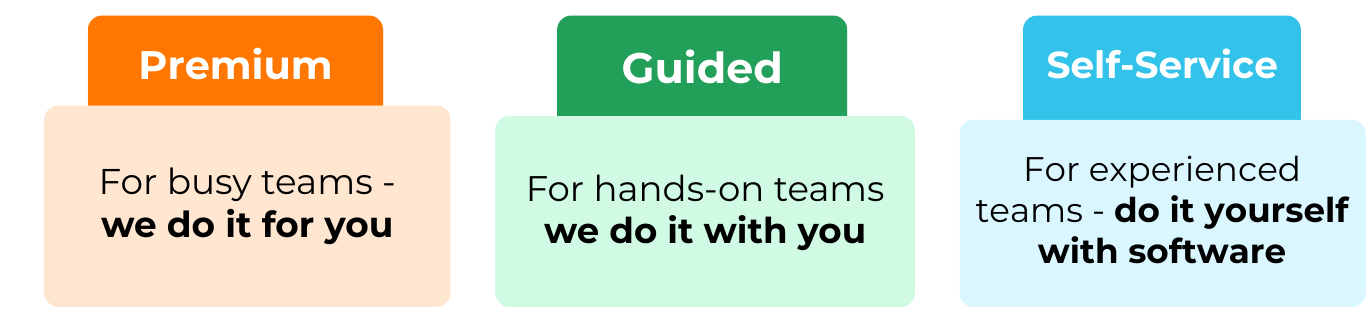
Plus, our transparent pricing on the landing page ensures you always know what to expect.