
IT equipment waste, referred to as e-waste or WEEE, is rapidly growing nowadays, becoming one of the fastest growing waste streams worldwide. According to Statista, approximately 53.6 million metric tons of e-waste was produced in 2019. In just five years, this had increased by 44 million metric tons per year and only 17.4% of this was documented to be collected, and properly recycled. The negative impact of e-waste on the environment is well-known.
Electrical and electronic equipment is also closely interlinked to social and economic development which brings up another issue. Countries that lack IT equipment and digitally skilled professionals risk being left behind in the worldwide economic development.
A couple of months ago, I approached Turing Trust as I spotted that they were looking for someone who could help them with some bits and pieces of their marketing. I was very glad to find out about the remarkable work that Turing Trust is doing in empowering disadvantaged communities in Malawi by providing second-hand, refurbished equipment to schools and supporting students to gain digital skills.
Nicola Turing and I set up an online meeting to get to know each other and speak about their needs and priorities. Nicola took me through their day-to-day job and, particularly how they collect the second-hand equipment that businesses kindly donate. I quickly understood that donations are crucial for them to keep helping students with their digital education.
After that introductory chat, we agreed the best way forward would be to raise awareness through their social channels. To do that, I created a social media calendar for them to schedule their upcoming posts and we went through some tips and tricks to improve the engagement rate on those social channels. Finally, we also set some SEO good practices to drive more traffic to their website.
But this is not a blog about marketing, so let’s fast forward to what really matters.
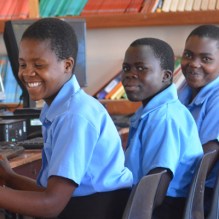
The Turing Trust was founded in late 2009, with major growth in its activities and impact since 2016. The Turing Trust has now provided over 9,200 computers to schools in Africa and helped 82,000 students learn IT skills. The computers are all loaded with educational resources providing students with a wealth of information in schools where textbooks are in short supply. Through training days and one-on-one training sessions they have also trained 720 teachers in computer maintenance and repair and using computers in their lessons.
Refurbishing IT equipment has also had a remarkable positive impact on the planet. Giving a second life to the equipment has helped save over 3,000 tonnes of carbon that would have emitted into the atmosphere otherwise. As mentioned above, e-waste has dramatically increased as we are becoming more and more dependent on technology. In most cases, the equipment is in excellent condition so, reusing ICT is the best way forward to collaborate with the finite resources of our planet.
As you may have guessed, The Turing Trust is carrying on the legacy of Alan Turing, the brilliant mathematician, World War II code-breaker, and founder of computer science. Alan Turing realised that computers would make a huge impact in many areas of our lives and saw them as a tool for solving problems. Set up by his family, including his nephew, Dermot and great-nephew, James, The Turing Trust is keeping alive his memory and legacy by helping people in Africa to benefit from computers and the digital age. But as Alan Turing said in 1950.
“We can only see a short way ahead but can see plenty there that needs to be done.”
Donate your old computers to The Turing Trust here.