
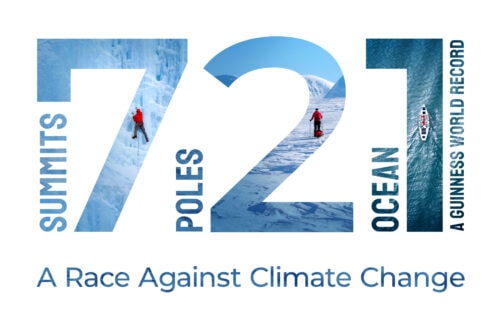
Nick Hollis is an international mountaineer who has seen the impact of human beings on our planet, particularly in Amazonia. He has set the 7-2-1 challenge to raise awareness and funds for the preservation of rainforests and nature reserves.
It all happen when I completed the Seven Summits. And when I climbed Everest, I was firstly climbing as a part of an eco team. And collectively, we removed five metric tonnes of rubbish from the mountain. And for me, that was as important as climbing the mountain itself.
Will Richardson 00:04
Welcome to the Green Element Podcast where we meet business leaders and innovators transforming their operations to be more environmentally and socially sustainable, and in the process help you on your journey of sustainability. I'm your host will Richardson. If climbing the highest summit on each of the seven continents skiing the poles, rowing Atlantic sounds like a daunting prospect to us. They're the kind of tasks my guest today eats for breakfast. He climbed his first mountain at the tender age of 12. And is the driving force behind the 7-2-1 Challenge designed to put the spotlight on sustainability. Nicholas, welcome.
Nick Hollis 00:43
Thanks very much, Will. Actually, a pleasure to be here. Most people wouldn't even think about something, maybe just one of those climbing one mountain. And what's this about how, why it was never in the plan to go as far as it has if I'm completely honest with you. And you hit the nail on the head as a 12-year-old. I climbed Snowdon as a part of a school trip. And it planted a seed that stayed with me. And once I pass through university and got a proper job with a car, I had access to the mountains. And I found myself really quite powerfully drawn to the mountains and I have done all through my life. And it's just really been this extraordinary journey, a journey that started in Snowdonia, as I gained experience. I then climbed my first big mountain, which was Kilimanjaro. And that's one of the Seven Summits and after climbing as I've climbed one of the Seven Summits, that's amazing. Maybe I could do it too. And with a little bit of research and a little bit of training, I went back into the mountain range and climb the highest mountain in Russia, the second one of the Seven Summits. And this journey just went on and on. And I don't know whether you'd call it an addiction, it's certainly a passion that is for sure. And As the years passed, the mountains got bigger, higher, more technical, more difficult, and ultimately took me to the top of the world, Mount Everest, which I climbed in May 2019. So exactly two years ago. And yeah, it's been an extraordinary journey.
Will Richardson 02:21
How was the 721 Challenge borne out? I can, I can understand why I kind of understand why you've wanted to do it. But you know, what, what, where was the seed of thought? Where did it come from?
Nick Hollis 02:38
It all happen when I completed the Seven Summits. Which is to say the last mountain I needed to do that challenge was Everest, which climbed in 2019. And when I climbed Everest, I was firstly climbing as a part of an eco team. And collectively, we removed five metric tonnes of rubbish from the mountain biking in the highest section of the mountain. And for me, that was as important as climbing the mountain itself. But also, I was supporting the international conservation charity Woodland Trust, who hopefully many of your listeners will have heard of. So David Attenborough is a patron for example, and Woodland Trust, do some amazing work around the world, primarily buying and protecting endangered primary rain forest and turning that into reserves protected land using the local people to actually manage the lands moving forward. And I was raising money for Woodland Trust climbing Everest. And when I finished the Seven Summits, I started to reflect on life and a lot of people were saying to me at that time, but surely you're going to retire now you've achieved your lifetime dream and the Seven Summits was it really was a dream of mine, not a gauntlet. The truth is, I didn't even think about it, climb the wall. And on reflection, I started to think well, I, I now want to start thinking about my legacy. And I've been incredibly fortunate. In my life. I've climbed these amazing mountains, I've been to stunning places. But I've also unfortunately witnessed firsthand the impact that us, human beings are having on the planet. Firstly, there's climate change. And the places I tend to go in the higher altitudes or out to places like Antarctica, the impact is amplified. So whether you're talking about a one degree 1.5-degree change in temperature around the equator, that can equate to three or three and a half degrees when you're up near the poles. And when you're up at these higher elevations, which in turn is having a profound effect on the landscape. That leaves you'll erosion, the amount of meltwater coming down the flooding that is occurring for the indigenous communities that live in these areas. And I'm also really passionate about the jumbo rainforest in particular the Amazon, it's a place I go back to year after year, I run some very special expeditions through some remote parts of the Amazon jungle, particularly an area called the tambour patter region. And for me, every time I go back, the point where we start the expert, the point where we put the boats in the water is invariably 100 or 200 yards further back, I, the forest is shrinking. And the reason it's shrinking is people are turning up with chainsaws, this is a protected area, it shouldn't be happening, but it is happening. And you can hear that sound of the chainsaw. And it's truly to me, it's heartbreaking. And it brings me out in tears every time I see that. So I've got I suppose a real heartfelt need, and a responsibility to spend the rest of my life giving something back. I've taken a lot from the world in my life. And now it's time for me to give back and do what I can in whatever capacity I can to make a tangible difference so that future generations can actually enjoy areas that I've been able to enjoy in my lifetime.
Will Richardson 06:06
When you go to the Amazon, and every year, it's 100-200 yards further in, you've probably got local guides that you work with, what do they think about it? Do you talk about it, and you talk about that difference?
Nick Hollis 06:24
We talk about it a lot. And I've got an amazing team that I work with when I go into the Amazon, one of whom is a microbiologist, the same as me, absolutely committed, and he has dedicated his life to conservation. What do they feel about it, they feel heartbroken. They feel desperate to see this happening in a country that they're incredibly proud of. But they also feel very helpless. Because what they don't have is they don't have the profile, they don't have the platform to be able to communicate what's happening firsthand. And they don't have the financial resources to be able to do something. Because you think about it. What they're ultimately trying to do is compete with whether it's industry, whether it's the drug cartels, or whether it's just local people that don't have their economy it's such that they have to chop these trees down to turn them into charcoal so they can cook their food. And that's the reality of what's happening here. It's a very complex project problem. They're aware of it, they have the insight knowledge, certainly or they don't have is the power to actually do anything tangible to make a difference there.
Will Richardson 07:33
Because you do hear about the Amazon. And I guess I'm in a different position because this is my job. So therefore I'd say I see it and hear about it almost daily. But what do you think they need in order to get that platform?
Nick Hollis 07:49
What they need is they need governmental support. They also because it's very easy for us to sit in our western world, in comfort with food on the table to say why are they doing it, but just for a moment, put yourself in the shoes of somebody who's lived on the periphery of the Amazon rainforest that absolutely poor, they probably at best have a bike for transport. And they need to feed their family. And understandably they want their children to be educated. They want their children to go to school and have a better life than they did. And what are the options that are available to them? Well, they can support the drug cartels in terms of planting coca leaves, they can go in and remove wood, which they can sell at a decent profit to support themselves. So for me, if you're going to find a solution, we've also got to ensure that the people that actually that are doing the damage, because they're not getting rich out of this, they're doing this for survival, have a choice, that they're able to support themselves and support their families in a different way. And ideally, that would be turning, you get to say turning poacher turned gamekeeper and actually using those people that have the knowledge of the area that have the knowledge of the forest, to now start protecting, protecting it. And that is really a process of education because what we need is for them to understand that their long-term future is actually dependent on keeping this primary rain forest exactly as it is. But we've also got to back that up with the financials, there needs to be an economic reason why they're not going to go in there and destroy the forest, why they're not going to chop that next tree down.
Will Richardson 09:35
That's really interesting. And this, I guess, takes us on to why you know why you're doing the 7/2-1 challenge. And I know you speak to a huge amount of people on a regular basis about these subjects and about what's going on.
Nick Hollis 09:53
Yeah, and so for me the reason for 721, again, slightly complex on a personal note I needed a new challenge. When you come off these big expeditions unless you plan another one, the truth is you can end up in quite a depressed state. Because normal life can feel really quite boring when you've been away 8000 metres, putting your neck on the line and these very challenging environments. And for me, I need something to look forward to something that's going to challenge me that's going to focus me. So there's that one component there. With 721, I wanted to do something that would firstly raise awareness for climate change, and also do something tangible. And that's the important thing, something tangible that would make a difference in the world. And I spent a lot of time researching projects, different things that I could do. I had a number of meetings with Woodland Trust to understand, okay, what projects have you got that I could help you with that I can support you. And they mentioned one particular project, which is called Laguna Grundy, and that is a 4000-hectare nature reserve in Guatemala and woodland trust are currently buying 4000 Hector's of the primary rain forest is a very, very strategic acquisition, in the sense this land will link to existing nature reserves together to form one large corridor of protected land. But the reality is, if they don't buy it if that purchase doesn't go ahead, then it will be bought by loggers. And that land will be destroyed, it will be destroyed forever. So for me 721, I can use that, firstly to support the woodland trust on that project. And I'm absolutely committed to making that happen to know that when I get to the end of my life, I can say yeah, I wasn't perfect. And that's not what 721 is about. But what I did do is I recognised the way I was living my life was having a detrimental impact on the world. And actually, I recognise that I acknowledge that I was honest and open about it and actually did something to make that difference to be able to get to the end of my life with a life of no regrets and look back and say, Yeah, I did something. The 721 platform itself, and this is what I'm trying to create is one of optimism, not pessimism, because when it comes to the environment, I think the problem is so big, it's very easy to become pessimistic, it's very easy to bury your head in the sand and think, well, it's not my responsibility, somebody else will take care of it, the government needs to do something business needs to do something. But for me, the start of this process is to recognise that every single one of us, every single one of us that drives a car, every single one of us that gets on an airplane, we are part of the problem. And if we can recognise that, then we can start to become a part of the solution. So 721 challenge in itself, it's a Guinness world record attempt to be the first person to complete the Seven Summits which I've now done skeezer, the North Pole, and the South Pole solo expeditions for distance. So these are big projects. And row, the Atlantic and the Atlantic is my next challenge, which I'll be taking part in December of this year. But as I say, it's firstly, to raise awareness is to raise funds for board land for us. But I'd like it to be so much more than that. I'd like it to be a project that people can participate in. People who get involved in, as I said, coming from a place of optimism, not that we all need to go out there and become perfect human beings because it's not realistic. And it's not going to happen. I'm certainly far from perfect myself. But if we can start encouraging people to make little changes, little changes, like maybe having a meat-free day, once a week now that would make a tangible difference. Making a change, like spending 10 minutes switching to a 100% renewable energy supplier that would make a tangible difference. And being more conscious about your day-to-day activities. Do I need to travel? Do I need to drive the car? Do I need to have the heating on? Could I actually be a little bit more efficient with the energy consumption, etc. And that is really what I'm trying to do with this whole programme.
Will Richardson 13:56
You do speak to schools, don't you? And you're a part of the educational process.
Nick Hollis 14:05
Absolutely. And coming off the back of the seven summits. So it was quite interesting that people want to talk to me. And it's open doors that would not have been open had I not climbed one mountain. That's the reality of it. I'm no different as a human being, you know, the year before I climbed Everest or the year after, but it does seem to carry a degree of gravitas. And what I've recognised is we can use that. And we can use that to open doors to communicating with businesses. And that's something I spend the majority of my time right now is talking to big business teams. And that is my day job. And to be in a position where to have a captive audience of people where I can take them on an emotional journey up a mountain like Everest, where I've got the absolute funk, focus, and attention, and then be able to show them firsthand what is happening to the planet. what is really going on in these extreme places, and, to share with them some ideas, some things that they can do themselves, they can go away, whether it's the organisation can do, or whether it's the individual within the organisation that they can do some little changes that they can make, that will make a tangible difference in the world. And it's a really powerful thing, I'm in a very privileged position to be able to do that. And what I've seen is the reception is amazing, and people are listening, and people now are changing. And I really do think that now is the right time. We've got this inertia, we've got this wave people recognise it, people are doing things people are changing. And I think it's always it's the hardest thing, isn't it, just to get the ball rolling, just to get the ball is definitely rolling now. And the way I see it is we need just get as many people behind that ball and push it as hard as we can and accelerate it and just get that change happening faster and faster. So yeah, I'm quite optimistic about where we go from here.
Will Richardson 16:00
So you should be. And I think it's really, it's really nice to hear because you talk to so many businesses on such a regular basis, you know, you are a window into the business. So it's great to hear that you're optimistic about what it is that's going on. What was brilliant about the way that you have brought your sponsors together is it's not necessarily all about money. Well, it's not about money, is it?
Nick Hollis 16:30
Not at all. And we had when I first started building 721, it was quickly apparent, we wouldn't need partners like any big project, you're never going to do it on your own, you need help you need support. And I sat down and made a list of the partners that would be beneficial that I would like to involve in the programme right from nutrition partners because I'm going to be eating a huge amount of food on this challenge. And also just to demonstrate that we don't need to eat these huge quantities of animal products that most of us and I'm as guilty as anybody consumes. So I've decided to try doing the challenge on a plant-based diet to show that we can perform at a very high level on nothing more than the whole food plant-based diet, which I genuinely also believe is the healthiest diet for us as human beings as well. So there's not just a health benefit, but there's also a tangible environmental benefit as well. And I'll give you some examples from our partners. I'm going to need sunglasses, absolutely critical, certainly on the polls, but also in the Atlantic. And we've partnered with an amazing organisation called water Hall. And they have an incredible story. The founder of water Hall is a microbiologist located in Cornwall, and he's a passionate environmentalist. And one of his lifetime bugbears was all about plastics, and in particular, the fishing nets that were washing up around the coastline of Cornwall. And we all know ourselves that the damage these nets are actually having on the oceans. And more recently, I learned that about approximately 50% of the plastics that are sitting in our oceans today are discarded fishing nets. So it's a huge part of the problem. But what the founder has actually done he now takes retrieves those nets from the coastline of Cornwall, and recycles them into products like sunglasses, which are brilliant. Litter pickers is another one. And more recently, he's just put together an agreement with NHS where they're starting to recycle face masks. So the discarded face masks now will be turned back into products such as sunglasses such as, such as litter pickup pickers. So yeah, that would give you an example of the type of partner that we're bringing into the team. And we've been in this incredible position where we've actually been able to literally handpick the people we want to work with. And what we found is the response has been extraordinary, not one single partner has turned us down. And whether it's nutrition partners, equipment partners, and we have been contacted by a number of organisations looking to sponsor the challenge. And again, we've been highly selective over who will have. And the reason for that is there are still today, organisations that want to be seen to be eco to be green to be environmental. But their primary reason for doing that is the bottom line because they believe they have to do it because everybody else is doing it. But ultimately, they're governed by the shareholders that governed by the profit of the organisation. And that is not an organisation that I want to partner with. I want to part with an organisation that is now much more conscious about their impact, that they genuinely take responsibility for themselves and the impact that they have in their marketplace. And those are the organisations that we want to partner with. So in effect, we're operating in a true partnership, not just using our platform to create an illusion. And that they're doing good work in a space where when you delve in behind the scenes, the reality is they're not actually that committed is a lip service piece of work as opposed to something that genuinely believes in and genuinely doing in the background.
Will Richardson 20:16
Here's a question for you, you have a company that, say what you've just said. But their actions, although driven by shareholders, profit, etc, are big. So, therefore, they end up reducing their environmental impact quite a lot, because they end up saving huge amounts of money, which then increases their profitability. Where do they sit in? I'm only asking because this is something that I've grappled with for years and years. So I'm just interested to know your thoughts.
Nick Hollis 20:54
So could you give me an example of a specific organisation? Yeah, well, without naming names?
Will Richardson 21:00
I've not Yeah, no, absolutely. I think, historically, we used to have back in 2005-2008, many more organisations that came to us that were they doing it for environmental reasons? No. were they doing it for financial reasons? Absolutely. They recognised that reducing our environmental impact would make them strategically, much better. They would be able to tender, they would be able to save money, they're over, you know, their overheads were less. So it's all driven by money, money, money. But for us as an organisation, yeah, that's fine. But actually, the end result was also that they became a more environmental company. So did it matter? And I think we were kind of like, you know, what, who cares what their driving forces at the end of the day, they are a more environmental company.
Nick Hollis 21:59
No. And yeah, so that makes a lot of sense to me, I completely agree with you. But we need to come back as a step from that and say, right, so what is actually really driving that change? And is it now because consumers are being more conscious about their spending power, that they're not willing to buy products from organisations that aren't stepping up to the mark. And I'll say something that I'm seeing trends more and more within the commercial space, is businesses themselves are being more conscious about their spending power as well. And they're buying from organisations that are committed to environmental causes to minimising their own impact. And it's a really good picture, and it's accelerating, it's good to see. So in that situation, yes, we can sit down we can have, we can have a sensible conversation about it. Because if the net effect is they're reducing their impact, and they're supporting what we're all trying to collectively achieve, then why not have a conversation? You know, that would be I suppose the discretion be what? Cutting off your nose to spite your face? That doesn't make logical sense to me. And I think right now, logic is what we need to have.
Will Richardson 23:09
no, absolutely. I'm with you on the greenwashing. And I think we're starting to see more and more of that. The Advertising Standards Association. Have you ever been on their website that you may or may not have done? I was actually on it the other night? and looking up different companies that have been basically done for greenwashing. It's actually quite interesting to see the different companies and why they've been pulled up on their different adverts and what it is that they've done, and I think we're going, we're seeing more and more of that, because I know that I'm listing and I think that's, that's the really good part is the greenwashing the because I remember going to a meeting with it was kind of a meeting we were listening to one of the head people in the advertising industry. And he was the managing director of one of the largest advertising companies. This is back in 2011. But he did say, greenwashing. It doesn't really matter. At the end of the day, we just, if they're greenwashing and they're kind of becoming a bit more green, then it doesn't, you know, that was saying the wrong messages. They got a round of applause as well for it in the company I was sitting in amongst and I was like, really? I'm not going to tell them what I do for a living.
Nick Hollis 24:38
Yeah, I mean, I feel that just feels very disappointing.
Will Richardson 24:41
I mean, it was a fairly long time ago. I guess what I'm grappling with and what I'm trying what I'm discussing is, if the motives are there to become more environmental, because of financial then it doesn't matter. But if the motives are there, they're not going to become more environmental. But yeah, they are saying they to become more environmental, then that's absolutely categorically wrong.
Nick Hollis 25:05
Absolutely, and we've, I think we've needed to understand this is getting complicated, is a complicated topic. But transparency is increasing now. And also consumers and businesses more educated, they have a better understanding. And they're more vocal about what it is they demand. And that let's come back, you mentioned at the start education because I think this is absolutely critical. Within the educational system, you've got millions of students who have, I would argue, a degree of environmental anxiety, they know there's a problem, they're not stupid, they're aware there's a problem. They also know that it's a problem that's going to manifest itself potentially in a very significant way, within their lifespan, as well. But the difficulty they have is, as a student, they're quite limited in what they can do about it. And they don't, therefore they don't have a solution. As a consequence, they have this sensation of anxiety. But it's not going to be long before these students are in the workplace. And they're only going to work for organisations that have a genuine commitment to conservation to climate change. And that's already happening now. It is from the research that I've done. One of the factors that people will consider when they're choosing a company to work for their career, is actually how do they stand up in this space? Are they genuine? Are they committed? And that's quite powerful because that in itself will start to drive change. So is it the band thing? No, it's not market forces are working, I would argue now in our favour of creating this change. And that's a good thing because it needs to happen.
Will Richardson 26:52
Yeah, kickstarter, when they announced they were a B Corp on that first day, they had a 30% increase in job applications.
Nick Hollis 27:02
And that says you know that that really says it all and BCorp? If you look at the partners we're working with for the 721 challenge, probably 60% of them are B Corp certified, or they're going through the B Corp certification process, which, and it's amazing, and it's a great community. But for those organisations as well, and it's happening now, and I think it's going to become bigger and bigger, this is going to give them a major competitive advantage as well in the marketplace, they have something that they are able to stand up and say we're different, we do things differently. And there is this is a really good reason to come and buy from us. And as you know yourself to get a B Corp certification. But that's not paying lip service. That's not a foreign taking exercise to get that certification, you've gone through hoops, you really are committed to the cause. And it's great to see that it's accelerating. And it's also great to be a part of that, that evergreen community as well.
Will Richardson 27:59
When we spoke a few weeks ago, you talked about your experience on Mount Everest and climbing up. And I think it would be really good to just talk us through what happened and how you ended up getting off the mountain. Because I think for many of us, we hear about so many people climbing mountains. And yes, we know it's hard. But I think what you went through really just shows how absolutely such a monumental task it was.
Nick Hollis 28:32
Yeah, Everest is a big mountain for sure. And I had an interesting climb. Let's come back a step. So I climbed in May 2019. And 2019 was a very contentious season on Everest, and it received a lot of media coverage. And the piece that received the most coverage was this horrific photograph taken on the 23rd of May by a climbing Sherpa. And there was a queue of mountaineers the entire way across the summit ridge of Everest. Now, that problem was inevitable, and we were able to anticipate it when I climbed the mountain. So when I arrived at the final camp, it's called the South Col and this is the launch platform for the summit. There was a wave of mountaineers that were arriving at the South Cole. But Incidentally, when we arrived, the weather had deteriorated. And what this meant was the majority of those mountaineers, were going to need to go into their tents on oxygen and make their attempt the following day. They didn't have arguably the skills or experience to climb in challenging conditions. So this presented a dilemma for us. Did we climb in bad weather or alternatively, did we do the same going our tents on oxygen and make our attempt the following day, knowing that the following day was going to be an unmitigated disaster. There was just no way you can have that many mountaineers, climbing Everest going into that top section without there being huge problems. And during the earlier phase of the expedition, it was very apparent to me that a proportion of those mountaineers didn't really have the skills or experience needed to operate on a mountain such as Everest, they hadn't put their time in, they hadn't developed themselves as independent mountaineers. And that again, once you've got an experience on the summit ridge of Everest, where there are some technical sections, what you tend to find is that they're very, very slow. And that thing creates bottlenecks, which normally wouldn't be a problem in the Lake District, it just is a frustration. But on a mountain like Everest, where you're using oxygen, and that tank of oxygen, it's got a finite time, it might last you depending on the flow rate anywhere between four and six hours. So if you're spending in a traffic jam below the Hillary step for two hours, that could end up being the difference between a successful summit attempt or actually never coming off that mountain again, when I climb, I think the total fatality rate within my climbing community was 13, it was 11, or 13, mountaineers didn't come home. And many of those deaths, sadly, were avoidable. But coming back to myself, so I made the decision along with my climbing Sherpa to actually climb in the bad weather. And what this meant was we had just 50 mountaineers that were making their attempt on the same day, most of them from what I can see were very strong mountaineers. But we were climbing in strong winds. And for me during the night, because I set off at 9 pm. That's pretty standard for Everest, you climb through the night. But we have these howling winds and my goggles were rhyming up, they were getting covered in ice. And in the end, I just took them off. I was getting a lot of ice crystals blowing into my eyes, which was a little painful at the stinging. But I wasn't concerned about snow blindness, because obviously, it was in the night, it was dark. When I arrived at the summit, which was about 5 am in the morning, and at this point, the sun was just starting to rise and was getting the light. And I looked across the right-hand side of the summit Ridge across Tibet, expecting to see literally the best view in the world from the top of Everest, and it was the most incredibly heart-sinking moment. Because I couldn't see a damn thing. It was like looking through a steamed-up pane of glass. And I knew what really what this meant, and that if I couldn't get myself back down off the summit, I wasn't coming down. Because when it comes to getting rescued from the top of Everest, you might as well be on the moon. Helicopters can't fly that high. The other mountain is at this point, we're just starting to arrive on the summit, but they can't do anything to help you know at that those altitudes. All you can really do is put one foot in front of the other. And if you can't get yourself down, you're not coming down. So I grabbed hold of my amazing climbing Sherpa and good friend Pemba said pens. We've got a problem. I can't see. Pembroke this time incidentally was smoking a cigarette. So he's on the top of Everest.
Will Richardson 33:20
I love the fact that he smokes a cigarette at the top of Everest. It's bizarre. But amazing.
Nick Hollis 33:26
It's absolutely genius. The only goes to show just how superhuman the Sherpa community is. And yeah, it's not said enough that they really are the heroes of that mountain without them all bets are off, right. So as I grabbed hold of the pencil pens we need to go and I had a small amount of vision I could just about make out the outline of Pemba. And particularly his yellow boots he had these bright yellow boots on. So I handed him my rapes. He can manage the rape work, I couldn't see the safety line to even clip into it. And I was trying to put my feet my yellow blurs into Pembars' footprints, in essence, where his yellow blur had just been. So trying to retrace his footsteps to make our way back across the summit ridge. But initially, we were dreadful at this kind of blind climbing game, it was a bit like Dumb and Dumber, trying to get back across the bridge. And I fell off it three times. So each time I get it off, down the right-hand side put in a break, climbed back up to Pemba, which at those altitudes is just beyond exhausting the heart feels like your heart's about to explode. You just cannot get the oxygen your just lungs are on fire. And the third time this happened it was got to the point where I just didn't think I was gonna get off here. I'm starting to think okay, I need to set the camera down now. And I know his wife, I know his kid. And yeah, and that was what was going through my mind. And I really at that stage needed a miracle. And the incredible thing is the miracle came. And it came as just a thought in my mind. Nick, a blind person climbed Everest, which is, which is true, I think it was back in 2003, admittedly with a huge amount of Sherpa support. But that coming into my head at that point in time changed everything for me. And it literally flipped my mind from a place of complete despair to a place of hope and belief and thinking, well, if somebody else can do it, I can do it. And I remembered to the stage of shouting a Pemba, "come on, Pemba! get up one more time, we've got this!" And we carried on back across the region. And over time, we got pretty professional, a blind climbing, we got a little system going and we were able to start working across the summit ridge. I fell straight down the Hillary step. I'm not sure what Pemba was doing at that stage, probably having a cigarette. But someone was looking after me that day, and I literally was uninjured. I can pick myself up, climbed up to the south summit, and even managed to then negotiate about 8 am sales you need to do to get back off the South summit to the relative safety of a place called the balcony. So yeah, it was an absolute epic descent, not one that I certainly have ever planned or foresaw. And I can genuinely say I am lucky to be alive. And the reason that I'm here talking to you today is because of the incredible Pemba who I worked with on that expedition.
Will Richardson 36:32
And I think that story, just articulate it so well that it is so dangerous doing what you do. It's not just going for a walk in the Lake District. It really is a very, very, very hard thing to do. Over your years, have you seen the differences in different mountains? And have you seen firsthand the environmental degradation that happens?
Nick Hollis 37:02
Yeah, unquestionably. And I think there's one mountain that really illustrates it brilliantly. And that is Kilimanjaro. And so most of the listeners will know Kilimanjaro, the highest mountain in Africa. And it's this cone-shaped volcano and nearly 6000 metres high. And one of the things that make up my conic is it has this white rim around the top, which is actually a Glazier. And over the years, this glacier is getting smaller, and smaller and smaller. It's just melting, it's melting away. And if you look at a photograph of Kilimanjaro just 50 years ago, versus today, there's probably only about 25% of that Glazier left now I've been climbing I've climbed Kilimanjaro, gosh, well over 10 times. And in the 20 years that I've been climbing that mountain, I've noticed firsthand that that glacier is just getting smaller, and smaller and smaller. So that would be a really good example. The other one would be just the European Alps, and the glaciers are shrinking, and you go into the Alps now, and they're trying to put in, in measures like wrapping the end of the Glazier in insulating material to try and preserve them. But it's a losing battle. It's a losing battle. But the other thing that I've noticed, even within the time that I've been climbing mountains, it's not just the glaciers are melting, it's the weather, the weather systems are changing. And again, if I refer back to Kilimanjaro, historically, there was always a climbing season for Kilimanjaro, where you could be assured of dry weather, and a good summit day. So you typically go in August time, you typically go in January time. But now it just doesn't work. That way, you can get weird and wonderful weather at any time, the seasons changing on the mountain. And I'm seeing that wherever I go. These weather systems are changing. We're also getting much more extreme weather we've got on average things are warming up, that's for sure. But you're getting these kinds of greater extremes, whether it's heat or whether it's cold. So yeah, it's a changing environment out there. No question at all. And so I'm it's really disturbing to hear. And I guess it's conversations like this. It's an understanding of what's going on through your eyes. And knowing that what, what our actions can actually do, both positive and negative to balance view, we can do what you're suggesting, with regards to changing to renewables, eating a more plant-based diet, and really help with that catalyst of change or do nothing and expect the grasses to keep on shrinking. Thank you so much for today, Nick, it's been an absolute pleasure talking to you. And thanks for listening to the Sustainable Business podcast. If you want to learn more about sustainable business and talk to other like-minded professionals, why not join our online community sustainability solve.org. Join now and find a space to collaborate, learn and inspire others to become more environmental. And if you enjoy this podcast, make sure you subscribe so you get every episode, and don't forget to follow Green Element on LinkedIn, Twitter, and Instagram.
Don't miss out on our podcasts on the go with Apple, Spotify or Google Podcasts.