Australia is at the forefront of the climate change movement, facing the need to protect its biosecurity, enhance climate resilience, and overcome geographic isolation. Over the past five years, Australia has made significant strides toward sustainability, particularly through its commitment to partnering with the private sector. Together, they aim to design out waste and pollution, promote material reuse, and work towards supporting the circular economy by 2023.
Join us in this month’s episode of our podcast as we delve into Australia’s role in tackling climate change and its unique sustainability challenges. Our special guests Dr. Mary Stewart and Arvind Sharma are renowned sustainability experts in Australia, bringing their valuable insights to the conversation. Dr. Mary Stewart is the CEO of Energetics, Australia’s leading specialist consultancy in energy and carbon management, and Arvind Sharma is the Executive Director and ESG and Sustainability Lead for Rennie Advisory.
This episode of the Sustainability Solved Podcast is sponsored by Good Citizens.
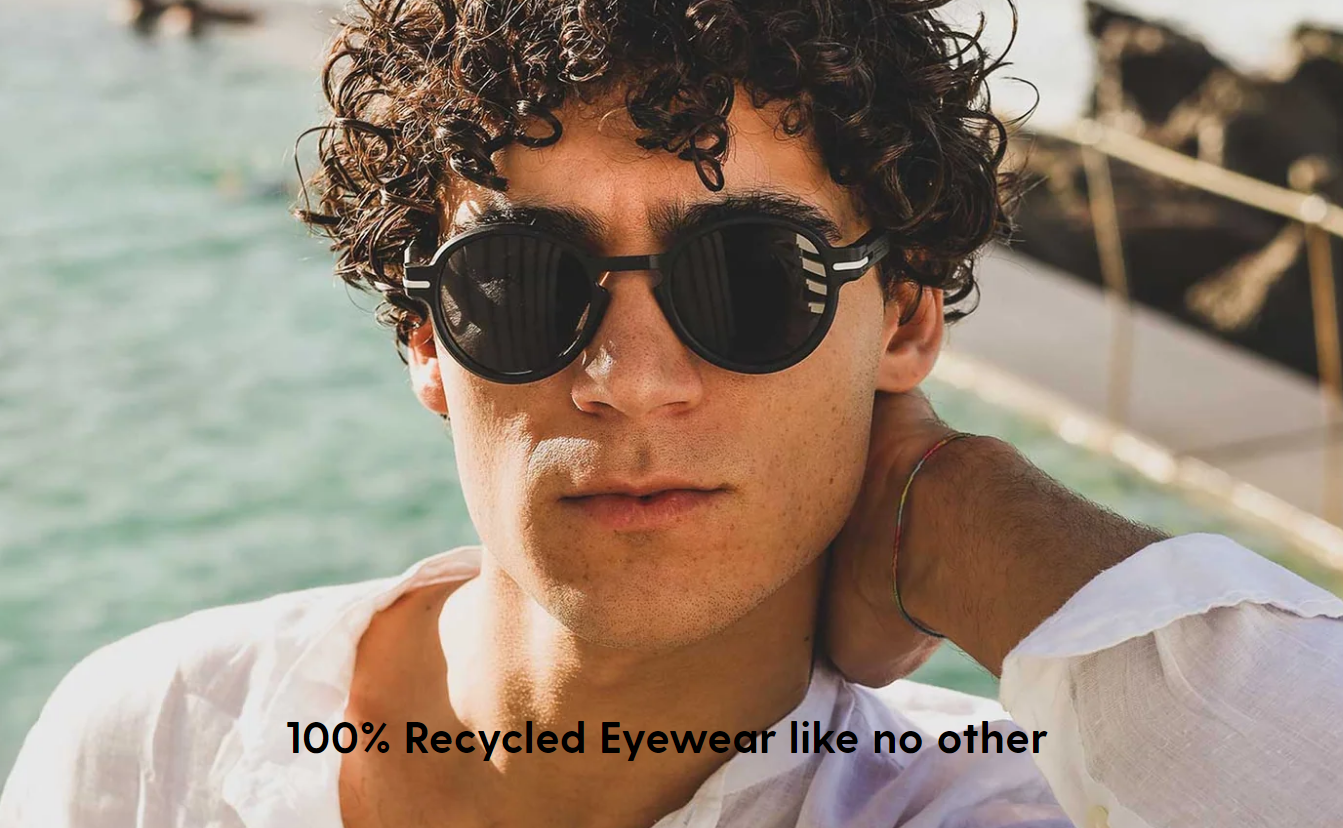
Good Citizens is an eyewear brand like no other. Born to untrash the planet of single-use plastic. Good Citizens turns a discarded single-use plastic bottle into a pair of 100% recycled frames. It took them 752 days & 2500+ failed attempts to perfect the first pair of sunglasses. Even more unique, the modular system means you can repair each part in seconds. So, if your dog munches on them, it’s all fixable.
Use this discount code GREEN20 to get $20AUD off and help untrash the planet.
Intergovernmental Panel on Climate Change (IPCC)
Power Purchase Agreements (PPAs)
Australia Securities & Investments Commission (ASIC)
A Short Guide to the Circular Economy
Will Richardson 00:10
Hi and welcome to Sustainability Solved the Sustainable Business Podcast. I'm Will Richardson. I'm the founder and CEO of the Green Element Group, incorporating Green Element. Compare your footprint, and of course Sustainability Solved. We've been empowering organizations to manage their environmental impact for just and sustainable world since 2004. Today we have a special show. Looking at the sustainability challenges of one country in particular. Australia is at the forefront of climate change. It needs to protect its biosecurity, become more climate resilient, and also tackle geographic isolation. My guest today are two of Australia's most respected sustainability experts. Dr. Mary Stewart is the CEO of Energetics, Australia's leading specialist consultancy in energy and carbon management. And Arvind Sharma is Executive Director and ESG and sustainability lead for Rennie Advisory. Welcome to both of you. Over the past five years, Australia has stepped up its efforts to become more sustainable. And one of the big headlines is a commitment to work with the private sector to design out waste and pollution, keep materials and use foster markets to achieve a circular economy by 2030. This sounds like a big goal. What does that actually mean for Australia in your experience? And what are the opportunities who wants to go first,
Arvind 01:42
I can go. Mary's smile is indicating that. Australia, you know, the circular economy opportunity is a big opportunity for Australia. And the vase sector in Australia is undergoing a seismic shift. The focus is on improving resource recovery, increasing the use of recycled materials and better managing waste material and also transitioning to renewable energy sources. So there's a strong support for entrepreneurs who are designing for the future and disrupting the way Australia extracts manufacturers, reuses and recycles resources and products. So a number of schemes have been put in place, along with incentives, grants and support mechanisms to encourage the circular economy approach. Some of the examples I can share, and maybe you can add to that. So there's a national waste policy action plan, which is supported by a recycling modernisation fund. And the fund is, you know, I can tell that it's on track to generate over 1 billion Australian dollar worth investment in recycling infrastructure. And there are other incentives introduced such as national product stewardship Investment Fund, then Australian recycling investment fund supporting new and emerging industries, including recycling and clean energy. And this besides $1.9 billion powering the region's one that is all decarbonisation of existing industries. So it's, I would say that there's huge focus and investment diverted to circular Australia, which means government and the country is welcoming entrepreneurs that have products for the future or technology for the future.
Will Richardson 03:30
Okay, brilliant. Yeah, really interesting, Mary?
Mary 03:33
So Australia absolutely wants to play its part. But one of the challenges in the global circular economy is that we are so far away. And a lot of the solutions that make sense to European company that is in the middle of industrial networks doesn't make sense for Australia, we don't have the concentration of companies and of entities that enable us to take best advantage of a lot of the circular economy technologies. So the Australian circular economy to a great extent, is going to have to be developed by us for us. At the same time, there's a huge opportunity for Australia, in supplying those materials into circular economies in which we are well endowed. And having a faster and an accelerator transition to carbon free electricity is very important to this. So that at least the materials we're supplying into other economies have lower emissions than they currently do.
Will Richardson 04:30
Okay. Interesting. Interesting. And it would appear that some of the targets that the government has set have already been surpassed. Do you think Australia should follow targets set by the IPCC or push for the government to set more stringent targets nationally?
Arvind 04:52
Absolutely. So to be consistent, that what IPCC suggests so forecast in terms of, you know, 1.5 degree limit to warming. So Australia has recently revised its targets under the Paris Agreement. But if you look at are we on track to 1.5 degrees pathway? The answer is no, there's more to be done more reduction, you know, to be achieved to be on track towards the Paris Agreement goals and 1.5 degree pathways. So I would say in summary, more action needed more robust policy instruments are needed. And more focus on, you know, strong and robust energy policies is required, although they have been Net Zero targets for Australia. But again, how to set those limit on the high emitting industries, which innovate safeguard mechanism reform is doing at the moment. But I would say that more action is required in Australia to be on track to 1.5 degree pathway, as suggested by PCC and
Will Richardson 06:11
Mary, what are your thoughts on this?
Mary 06:12
I mean, the policy debate in Australia is always an interesting one. And we don't really want commercial goodwill to be lost in a fight between two parties at federal level. So I agree with what I've been saying about let's set ambitious emissions reductions for certain sectors of the economy, let's make sure everyone's moving towards it. But I would hate to have good ambitious action derailed by a political discussion about targets, we are having a targets discussion at the moment that climate change authority has put the 2035 target out to consultation, I'm expecting there to be a lot of commentary around we really need more ambitious targets. And that might be the general sense that we're going to get from the private sector, the challenge will be if those very much more ambitious targets are taken to Parliament, and whether we can lose speed because Parliament could have challenges passing them.
Will Richardson 07:14
Because industry is almost further ahead than than governments in Australia, isn't it?
Arvind 07:22
I would agree to that.
Mary 07:23
Well, in things like the renewable energy sector, there's there's been the ambition of the private sector to deliver net zero and operations has absolutely driven the implementation of renewable electricity projects around the country. And really, policy has been playing catch up on that. And so the last thing we want is for policy to get in the way of ambitious action and not everyone's doing that. So we were not faultless in this, there are a lot of companies who are not doing it. But in the first instance, let's not slow down ambitious action. In the second instance, let's make the slow movers catch up.
Will Richardson 07:58
Because I feel I feel that it's the same in the UK and all around the world, that same scenario is playing out. So it's interesting what is actually going on, Australia's in a very good place to produce all of its own energy. Do you think that it will allow energy users to invest in renewable sources like wind turbines and solar panels, instead of cutting energy use
Mary 08:24
what we've seen play out in Australia over the last five or six years, we saw a significant price rise in, in electricity. And in response to that a lot of companies entered into PPAs into power purchase agreements directly to manage their energy price risk, they then moved into those PPAs to secure lgcs, or the renewable energy certificates that are used here. So they were starting to use PPAs to decarbonize the electricity. But really, they went to PPA in a response to the energy price shock. And we're seeing that happen. Now as the energy prices go up. Again, they didn't go to energy efficiency, they didn't go to demand response. Or you would think that the first cab off the rank would be energy efficiency, but it wasn't. And we seeing significant price rises now. And we are seeing some retreat to energy efficiency. But in the main the response to energy price rises has been to looking to ways to manage future energy price increases, and to reduce the risk around energy price, then to actually reduce what people are spending.
Will Richardson 09:29
And Arvind have you got any thoughts on this.
Arvind 09:31
I think I completely agree with what Mary said that we need to do more, again, I would say in terms of focus on energy efficiency, and rather than just looking at the economies, or economics of energy usage, and the cost element there
Mary 09:51
so just on that, you know, guess renewables gives you free energy, but it doesn't give you free energy all the time. That's right. And while there might be an oversupply of energy at some times of the day, there's not going to be enough at other times of the day. And the two challenges remain. The one is how do we get the energy from the renewable energy production to the person who wants to use it. So the network and the challenges that the network faces with these very intimate and suppliers of energy is not to be underestimated. And addressing that network challenge is a lot of reason for energy price, that price rises now and in the near future, that the other one is just managing demand to meet supply. So we're accustomed to having baseload. And it doesn't matter what you want to pull, baseload will meet it. That's not what happens in renewable energy scenarios, we've got to trim our sails to meet whatever renewable energy is delivering. So the role of demand response is as important as the role of networks in making sure that the lights don't cut out for anyone.
Will Richardson 10:55
But surely as renewables mature, we will see more and more of a percentage increase, we've seen that with Spain, producing 100 percents for a lot of the time. And then in the United Kingdom, Scotland, produces almost 100 percents in wind. And so we'll start to see these scenarios play out around the world. But equally, we'll see scenarios where there will be countries that can't produce renewables, because they're either too small, and have too many people for such a small area. And that will, in itself, allow us to understand how to deal with scenarios like this.
Mary 11:39
I mean, it's Australia's is an island at grid. So we don't have other countries. And we don't have other networks that help us to maintain the stability of the network going forward. And we have had South Australia operating on 100% renewables for significant periods of time. And the same for Tasmania, New South Wales can operate entirely on renewables for certain periods of time, we're not only talking 16 hours a day, here we talking 24 hours a day, 365 days a year. And it's that that you've got to build your network for and you do start work that the energy efficiency counselors down here, you start looking at building an oversupply of renewables, because that builds in the resilience you need, and it's cheaper to build too many renewables, then then building just the right amount of renewables and a whole lot of batteries, we've got a lot to learn about what the network of the future looks like, and how we interact with it. Australia is an extraordinary position where we have both wind and solar. And we know that we can meet our own energy needs. But getting there is not going to be without its hiccups.
Will Richardson 12:46
And the private sector will probably have quite a large part of that, won't they? Because I've noticed that Amazon and Microsoft are quite large users in Australia. And we know how much money they're putting into producing their own renewables because of the profit margins, allowing themselves to be able to do it. This should affect Australia in a positive way, I would imagine. Absolutely. So going into the energy efficiency and exploring that more. Is there a skill shortage in the sustainability sector in Australia? I've been what's your experience on that?
Arvind 13:22
I would say absolutely, there's a skilled shortage, you know, the capability gap still exists. So while there's great wealth of knowledge and also wider acceptance, to act on climate change, or other sustainability issues, the capability gap is very visible. So in our interactions with business leaders and board members and heads of sustainability and CFOs, or head of decarbonisation, skill gap appears to be one of the barriers in fast tracking are implementing sustainability goals. Now, if you look at familiarity and knowledge on net zero ESG, or scope three emissions, it is required for many roles, so it's not limited to the sustainability function within the organization. So what we are seeing is more awareness or more skills required to equip business leaders starting from the operation level, to the boardrooms, to upskill. And to have that strong business case on for sustainability. And definitely we see at the base, the new energy focus is growing in Australia. I think there will be a massive skill shortage going forward. You know, and that could be a hindrance or a barrier, in actually, it's achievement or implementation. That's what we are seeing in our space. When it comes to consulting. We we've seen that come companies are taking initiatives, you know, along with the universities getting involved in the curricular design. But again, I would say that one in four graduates, we feel that is ready to roll when to when they join the industry. So definitely there's a skill gap.
Mary 15:22
I'm going to agree with Arvind, on that there's definitely not enough people to do the amount of work that needs to be done, and probably exacerbated by very, very clear policy settings in larger countries. So the IRA in the States, and the European and UK netzero ambitions are because there's policy certainty and companies have have got real reason to act that sucking resources away. And it's really difficult for Australia as a relatively small country a very, very far away to fight with those big pools on talent. So there's yeah, getting hold of the right people and even more. In addition, the right technology is not not trivial here. At the same time, we've got big sectors that have uncertain futures as we move into a decarbonized economy, and they all employ a lot of people. So maybe our answer is not about getting skills from other places, but upskilling and reskilling that the people that we've got, absolutely,
Will Richardson 16:24
we're seeing that a lot in the oil and gas sector in the UK, huge amounts, rafts of people are now moving across. I mean, I live in Scotland. And I see the amount of people in Aberdeen that are just literally transitioning through to renewables, because they've got the right skill set. They're engineers with the right skill set and the right mindset to be able to put their minds to a different industry. But the same kind of thing, if that makes sense.
Mary 16:51
Yeah, similar challenges
Will Richardson 16:53
Yeah. How do you think employers can combat the skill shortage? I mean, you've touched upon upskilling people within different sectors? I mean, do you think it's as simple as that? Or do you think you will be needing to import talents, or working with higher education establishments and bringing people in through from those graduates that Arvind was talking about earlier?
Mary 17:19
We find it difficult to work with very, very fresh graduates just because of the type of problem that we engage with. So we usually finding people two or three years out of university, it's not an easy question to answer. If we look at 2050, we know that everyone in the economy will have to understand low motions along have to understand what it's like to work in the in this carbon free economy that has very variable weather. So everyone is going to have to have the skills not just the sustainability officer or someone who's advising the CFO. So really, it's it's not just about training the right people to come into our sector. It's everyone who's getting an education needs to have energy and climate, the transition and physical risk built into their degree, so that they know how to survive in the economy of the future.
Arvind 18:10
Yeah. And I think, you know, employers and organizations should also identify and signal the skill they need based on their business outlook and the strategies and also the future direction they're taking, because all of them have most of them, I would say have committed to net zero target. So I'll on strategy on a page that looks really good. One of the key gaps is who is going to implement who has know how and skills to deliver those decarbonisation plans or roadmap. So I think that's something absolutely needed. We also seen some of this initiatives where local industry and some large corporates, they are partnering with universities, obligational training institutes to bring relevant classes to their institutions, while also bringing students into workplace to gain on the job experience. So I think we have seen this shift in the past. I mean, in the recent past, I would say, and other interesting thing, you know, what I'm witnessing being, you know, a guest lecturer at Monash and Melbourne Uni, the curriculum design, and, you know, the updates to that curriculum and semester for projects or internship opportunities, I think they are really useful. And if we have more of that kind of, you know, on the field experience in college as part of the Masters or Bachelor degree courses, that would change and that would help bridge that skill gap to some extent.
Will Richardson 19:51
Okay. Yeah, I think we're seeing skill shortages in Europe and the UK, as well. How do you think software and AI will play a part in solving this?
Arvind 20:05
That's an interesting question. And, you know, efficiency is a buzzword, AI is the buzzword today. But I think that, you know, human and loop AI could be a solution where humans and AI work in collaboration, we give certain commands and receive some outputs through AI, and then the human element there, they check the basis of that analysis that AI has come up with. So that could bridge that gap slightly. But I'm not, you know, I don't think I'm best placed to visualize how AI will, you know, bridge that gap significantly. Mary, interesting to hear your views on AI,
Mary 20:52
I agree with you that the making sure that there's a human brain in the middle of the loop is very important. We're starting to see the rise of the machine on things like scope three emissions reporting. So there are a lot of software responses to how you gather and verify your energy and greenhouse data. So on that side, we are seeing a lot of efficiency gains to be had from the better use of algorithms and software. When we starting to look at the type of challenges and the type of decisions we need to take. While AI can make recommendations, we always will have to have the human as part of that loop to just check that the decisions that are being recommended are the right ones. But absolutely as in the rest of the economy, AI will have a seminal role to play in, in moving us forward faster.
Arvind 21:44
Yeah, just to add there, Will, what we've seen, there are a few tools, you know, based on AI and ML, specifically on climate risk assessment, where AI can actually identify those potential hazards and how those hasn't totally changed or different scenarios. But then humans need to follow up on those suggestions and review the basis. So that's, that's absolutely important, because we need to test the accuracy, completeness and relevance of the output before we actually make informed decisions.
Will Richardson 22:22
Yeah, yeah. Here's something else that has been playing on my mind is the fact that if we are seeing a shortage of appropriate skilled employees in the industry, then is there a danger that this will push wages up, and ultimately make sustainability consultancy? too expensive for organizations, which will then hamper those targets that we're trying to achieve?
Mary 22:48
I'm gonna say it's happened already. Given the current the current shortage of good strong people in the market, it's very and the competition for those skills, particularly from our clients, it's challenging to find people. And it doesn't, I don't know if it means that it prices consultancies at the market. It's more about what question are you asking the consultants to solve? And is that the right one to be asking them, because getting a consultant into annually run your energy and greenhouse reporting work probably is not the best use of that time, it would be better that you use them to solve how your data is collected, have you got the right controls in place is this auditable, reducing the actual price of you doing that data collection. So as our people become more expensive, and therefore our rates have to increase, we need to be able to demonstrate that our value add is still there. And make sure that we solving the gnarly problems and the ones that companies can't solve internally.
Arvind 23:52
Yeah, and we are already seeing this shift in terms of, you know, the awareness at a client's end, in terms of what specific advice they need from the consultants. So in the past, it used to be exactly what you said, Mary, you know, greenhouse gas accounting, make sure that the numbers are tracking fine. That is okay. But I think more and more requests are around in a review of that data, looking at, you know, closing the loop, checking whether the controls are robust and adequate. So that shift has already happening. And back to your point on the wages increase. That's definitely happening in current market.
Will Richardson 24:40
Yeah, because it's happening for us, but not to the extreme levels. I was when I was in Australia and New Zealand talking to people. The wages were so high, and we're seeing it to an extent overhead started making me think about the moral and ethical duties that we have as as consultants I mean, it's not in quite the same line as doctors and nurses. But we would be appalled if a doctor turnaround said, Well, I'll only treat you if I'm paid a million pounds a year, you know, whatever. I'm being ridiculous. But it's that, you know, how are we going to transition into a greener world, but then what you've just brought into the equation by talking about actually, consultants are potentially doing stuff that they shouldn't be doing. And they should be doing much more complicated stuff. And those wage increases will push that through. We've not seen that in the UK yet. And that's, that's interesting, that you've seen that already in Australia. And it just shows that we can all learn from each other. This is this is brilliant, this is exactly why I wanted to have this conversation. Do you feel Australia is resilient enough to manage the internal climate refugee crisis that it might face,
Mary 26:05
Australia has the advantage of being very, very big. And one of the biggest challenges with refugees is the space to put them were very big with not many people. So I think the internal refugee issue is not going to be as significant as a regional refugee problem. And if you look at this, the various things that are put out by the Department of Defense, you will see that the Department of Defense takes the regional refugee problem very seriously, because so many of our neighbors are starting to lose significant tracts of land. And so many of our neighbors will be displaced sooner rather than later if we carry on, on the emissions trajectory that we're on. So we've got the space. The next question is, do we have the economy and I think that really only time will tell, and it will be a function of how quickly people get here, and how ready we are for them when they arrive. But when we seeing things like the floods and the two one and 100 year floods in Lismore in the space of what was that four months? And now we're looking at what happens with the city center. And do we retreat from Lismore? Because Australia absolutely is at the forefront of experiencing what this change natural environment will be. We can't just follow on the practices and the frameworks that we're seeing in other economies. We're going to feel this first. So we have to get on the front foot. And I don't think we're there yet. We're pretty good at responding humanely when these crises arrive. But I think we do need to get on the front foot with respect to not just responding to the weather but starting to respond to the climate.
Will Richardson 27:56
Yeah. And on that note, do you think there are any other sustainability challenges that are special to Australia?
Arvind 28:06
So one, the location of Australia itself and vulnerability of Australia to climate change? I think that's a biggest challenge. And then given that we are an island nation, we do have challenges in terms of biosecurity, biodiversity, if climate change impacts are not taken into consideration. And the other challenge is also the policy environment, I would say which is addressable, but debatable. Happy to hear your thoughts Mary.
Mary 28:39
Australia has the most extraordinary biodiversity in the natural environment is your here is absolutely one of a kind. And the protection of their natural biodiversity has to be paramount. And it's it's an old continent, and recovery is slow. The ecosystems here are fragile. And we do need to protect them more actively than we are. Our marine ecosystems potentially are even more at risk than our terrestrial ecosystems. And we've lost a lot of the Great Barrier Reef. A lot of it's not recoverable are extraordinary nature is significantly at risk and requires a different type of attention to what it's received already.
Arvind 29:20
And these changes are expected to increase significantly over time. We are already experiencing warming of our climate, increasing amount of severity of disasters, you know be flagged off bushfire rising sea levels and also impact on the native species, like Great Barrier Reef is a big example. So I think we need strong action to reduce greenhouse gas emissions and also adapt to the changing climate. I think both mitigation and adaptation are required. Absolutely.
Will Richardson 29:57
You see a lot of this in the larger con Instant instant you if you look at India, it'll say the same with the US. It says the same, because you've got such a variety of climate within one country. It's interesting listening to you talking about that. And then I compare ourselves to the UK because we're such a small geographical space, that we don't have that variety of impact that is going on.
Mary 30:29
No, it's just there's such economic value in the natural environment here, not only from tourism and immunity, but the future of medicine. And with respect to emissions reduction and carbon capture and storage, the loss of any part of the natural environment is to the detriment of humanity as a whole. And we do need to take more care of it. Insects are in crisis in Australia, potentially more so than on many other continents. And loss of insects is a huge challenge to biodiversity. So, as I said, an old continent but we've been around for a long time and the systems take a long time to recover.
Will Richardson 31:10
Yeah, no, absolutely. And so are Australian companies communicating credible climate pledges, or do you see a lot of greenwashing, Mary,
Mary 31:22
I think that the credibility of climate pledges by Australian governments are equivalent to the credibility of those pledges in other countries, you get the good, the bad and the indifferent. What we do have here is a very sharp focus on greenwashing by ASIC, the Australian energy market operator. And they have been very clear and pointed about what constitutes greenwashing. And firstly, in quite a friendly fashion, but now they are absolutely going through any market disclosure by a listed company and are prosecuting companies who are making misleading statements, which is reassuring and I think has improved the quality of disclosures. The first company to be sued or to be fined for misleading disclosures while registered on the Australian Stock Exchange was operating in Botswana. So this is not only to the good of the Australian economy, but any company that registered here operating globally, it has led to increasing concerns about green hashing. So not saying anything until you're 100% sure that that you're in the right. And there are some moves to address that as well.
Arvind 32:37
I think you're right, and what we are experiencing in our recent discussions with a few of our clients, various supporting them with the sustainability reporting work. So most of these companies, you know, when you undertake the materiality assessment, and develop the report blueprint for them, so they are actually asking questions around greenwashing. What is the risk of greenwashing if we reported only on material topics? So that awareness has happened? And I think a triple C and ESIC have done a great work here in sensitizing and spreading awareness around what greenwashing could do to the organization and country as a whole.
Will Richardson 33:24
We've had quite a few court cases now around greenwashing in Europe. At the moment, we've got the shell Board of Directors being taken to court. clientearth are obviously a big part of the movement that's happening over here. With regards to stopping, say coal power station in Poland's because they became a shareholder. And the memorandum of association didn't actually fulfill what they said they were going to do, because it was partly government owned as well. So they're using law and using the legal structure to get into stop companies in their tracks. And then you'll seeing a lot of stuff with regards to the Advertising Standards, authority KLM have just been fined. So you're seeing such a lot of companies that are being really taken to task over what it is they're saying. Finally, what do you think the rest of the world can learn from Australia?
Mary 34:25
She'll be right mate? Maybe not. I think what we do see in Australia is is that we quite an easy test case we are large, there is a lot of space to stretch and to move and a very, very well educated society. And what we do see amongst our clients is that they will test new internal policies, new processes, new way of doing things in Australia before rolling them out, internationally and it does come down to that shield Be right mate, because Australians are really, really good at looking at something and making it work really quickly. So I think that's what the world can learn from Australia's don't necessarily copy how other people are doing it, make it right for yourself, and then see how you can move it to other places that time.
Arvind 35:19
And just one thing I would add focus on new energy, and the pace at which investments have been made. And, you know, policy levers have been introduced, if I cite some examples, so we are only on course, to be the world leader in hydrogen, our electricity storage and smart grid technology is among the world's best. And we are also I'm not sure what number but I recollect the seventh largest solar energy producer in the world. So heaps of work is happening in the new energy space in Australia, which is really impressive.
Will Richardson 36:01
Brilliant. Well, thank you both for coming on to this episode.
Arvind 36:06
Thank you for having us Will
Mary 36:08
yes, thanks for the invitation and for the conversation has been good to discuss these issues.
Will Richardson 36:14
That's brilliant. Brilliant. And that's it for this episode of sustainability solved the sustainable business podcast. Thank you to Dr. Mary Stewart and Arvind Sharma. Thank you. I'm Willl Richardson at the Green Element group and environmental consultancy with over 20 years of experience. For more information on Green Element and everything else we discussed today. Please check the show notes. If you have any feedback or questions you can get in contact with us at Green element.co.uk
Don't miss out on our podcasts on the go with Apple, Spotify or Google Podcasts.