The EU recently announced the Green Deal industrial plan, aiming to fast-track Net-Zero projects in Europe, making 250 billion euros available for greening industry.
Alongside this, the US Inflation Reduction Act also includes a $369 billion package for clean energy projects, and there have been calls for a similar scheme to boost businesses in the UK.
Can UK businesses take advantage of the rush to go green? And if so, how?
To help us answer this question, we are joined by Jon Dishotsky, an investment partner at Giant Ventures who builds and backs purpose-driven companies, and Wiktor Warchałowski, CEO and founder of Airly, who supplies real-time air quality data for governments and businesses.
This episode of the Sustainability Solved Podcast is sponsored by Good Citizens.
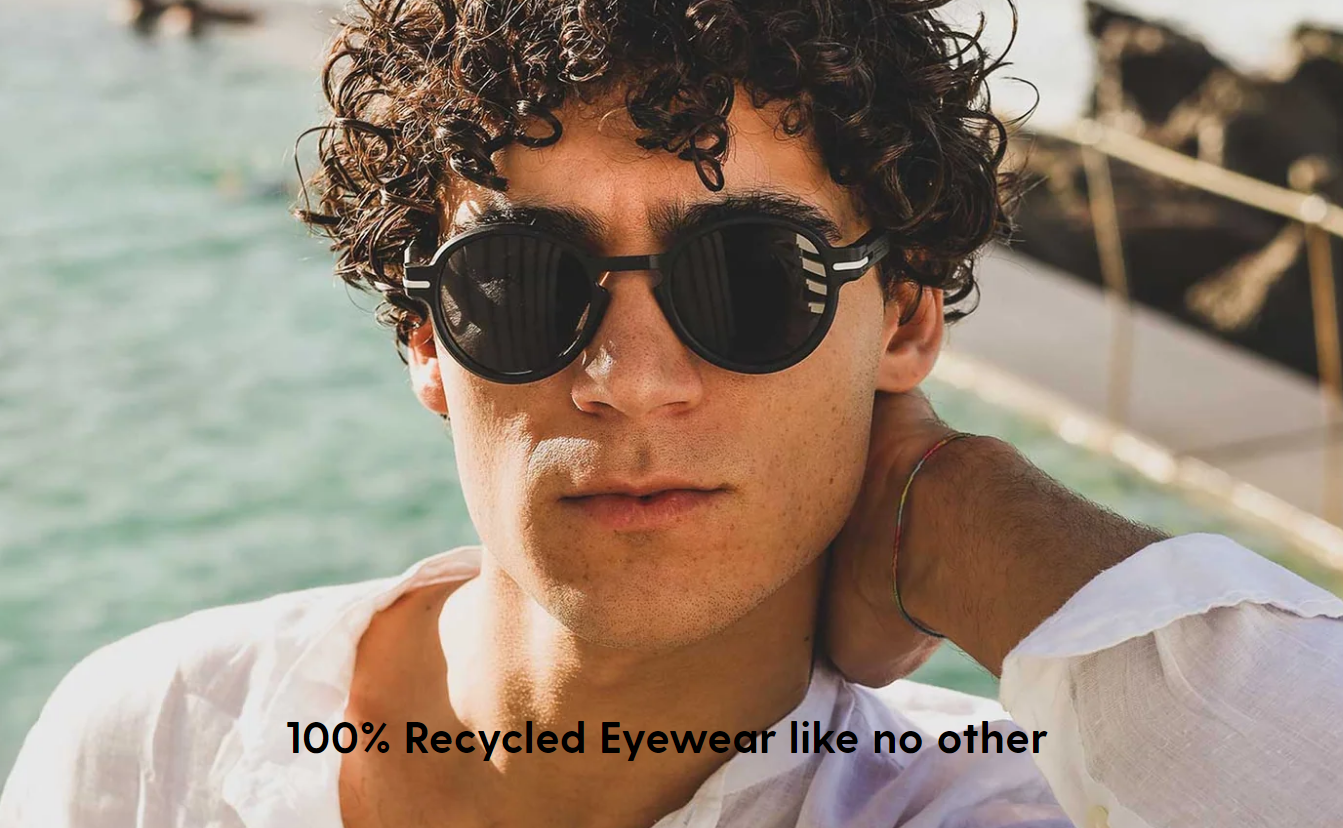
Good Citizens is an eyewear brand like no other. Born to untrash the planet of single-use plastic. Good Citizens turns a discarded single-use plastic bottleintoa pair of 100% recycledframes. It took them 752 days & 2500+ failed attemptsto perfect the first pair of sunglasses. Even more unique, the modular system means you can repair each part in seconds. So, if your dog munches on them, it’s all fixable.
Use this discount code GREEN20 to get $20AUD off and help untrash the planet.
Will Richardson 00:10
Hi and welcome to Sustainability Solved, the Sustainable Business Podcast. I'm Will Richardson. I'm the founder and CEO of the Green Element Group, incorporating Green Element, Compare Your Footprint And of course Sustainability Solved. We've been helping businesses become more sustainable since 2003. In the midst of a global economic downturn, sustainable businesses need to grow and innovate to ride out uncertain times. And that means more capital. How easy is it to get investment? And what are your options. The EU recently announced the Green Deal industrial plan, aiming to cut red tape and fast track Net Zero projects in Europe, making 250 billion euros available for greening industry. Alongside this, the US is Inflation Reduction Act also includes a $369 billion package for clean energy projects. And there have been calls for a similar scheme to boost businesses in the UK. Can UK businesses take advantage of the rush to go green? And if so, how? This podcast is brought to you by Good Citizens an eyewear brand like no other bond to untrash the planet of single use plastic, use the discount code gree 20 to get $20 off of goodcitizens.com.au. Today, we're talking about investment in sustainable businesses. And I'm joined by Jon Dishotsky, an investment partner at Giant Ventures who builds and back purpose driven companies solving the world's biggest problems. Wiktor Warchałowski , CEO and co founder of Airly, who supply real time air quality data for governments and businesses. In 2020, Giant helped Airly raise $2 million in pre seed funding. Thank you both for joining us today.
Wiktor 02:03
Thank you for having us.
Jon 02:04
Thanks for having us.
Will Richardson 02:05
I'm really looking forward to this and asking loads of questions. So Jon, we're in an interesting time for businesses. Do you think there has been a downturn in business funding in the last 12 months globally.
Jon 02:19
So more capital has been raised in the last 12 to 24 months than ever before, by investors. However, the pace of investment into companies has slowed down significantly. Now, I'm not a macro economist. So I won't bore you with all the details on why that happened. But essentially, we went from a zero interest rate environment where money was flooding into the market to try to chase returns to now there's a place where there actually are interest rates, and gravity has returned into the system. Why this is good. Number one is is that the best founders get started during economic downturns and or are building during economic downturns. The second thing is that this entropy has also created like a lot of talent that wants to move around to new companies and or start new companies. And then the third thing is, you're actually able to really build relationships with your founders or with new companies in advance of actually making an investment because everybody's taken a breather. We've slowed down. There was a time 12 to 24 months ago, where there was a thing called FOMO. Fear Of Missing Out, people would talk about a company within a couple hours, it would get invested in and you felt like you missed it. You know what I mean? You must miss the next best thing. Now there's a I guess I would categorize it as Jomo, Joy Of Missing Out. You're like, Oh, I missed a deal. That's okay. So you're allowed to be a lot selective. So I think the headline on all of that is, we've returned to normal, a lot of the tourists are gone. And it's kind of back to status quo in the startup community, which is a really good thing.
Will Richardson 04:03
I like the getting to know the founders before you actually end up investing. I think that's really important. Because it's a part yeah. Exactly as a partnership, and it's one of the reasons why I've been so reticent about doing it.
Jon 04:17
I get it. I think I think the average VC investment lasts longer than the average marriage.
Will Richardson 04:26
That's a horrible statistic! Wiktor you went through the investment process a few years ago. How has the business benefited from the investment since then?
Wiktor 04:38
Yeah, I think we raised first external funding from venture capital heroes, and that was joint ventures in in 2020, as you said, and I think I haven't realized before how helpful that can be for the business. And I think here that it's about four main areas. I think, first of all, is about expertise. and industry connections. So all investors, maybe not all, but some of them are coming to the business we've experienced in them in the sector. For us. It's a clean tech, it's a climate. And they can provide great insights and introductions to relevant people in the space, whether it's hiring new people trying to sell your product to potential customers, so their network is really massive. The second big thing for me is about mentorship and guidance. And here, I believe this is about me personally working with Jon on on a weekly basis, getting guidance, getting some support for me as the funder is super important, because I'm always reminding myself that I'm leading that company, and I have great team, but I do not have person that can, I can ask very openly for the feedback. And sometimes, like, here's some tough words, and I think it's good, it's good for growth, and for developing as the leader as the founder. So this is something that is definitely definitely important. And I was like, definitely, we can't miss the financials. Yeah, because at the end of the day, all companies are going to raise money to grow faster, and to invest that capital into your sales, marketing, product, technology. Without getting that money, it wouldn't be possible to build great products that we are building every day. So I think this is the next thing. And I think the last one, from my end is about some kind of alignment with values with goals that we are having. And being a part of that ecosystem. I think it's somehow connected with the thing that I mentioned at the beginning about getting access to the network. But I'm thinking clear from kind of different perspective, it's not even about getting introductions to relevant people, but being a part of the ecosystem, who first of all, are our understanding our vision. And the second thing about understanding the climate focused mission, which very often is long term, or they mean by that is, it's a long term commitment. And you need to get some patience, but also support in helping achieving this long term objectives. So I think there are few dimensions how working for VC firm can help the business. So it's a really, really great to have that sounding board, and you can get some some proper, very good feedback on your business.
Will Richardson 07:20
It's tough love, isn't it? I think it's really important, really important for any firing squad. Yeah. Yeah. And I think it's really important for any business. And it's to have that board to be able to say, No, you're an idiot. Why are you doing that, because it's a safe space, Jon areas or niches within sustainability that VCs are focusing in on at the moment, and others they're not?
Jon 07:45
I mean, you want to think of venture as being the place where capital can go into companies to create businesses that other wouldn't otherwise exist. And what I mean by that is, quite simply, if you want to build a restaurant, there's largely like a pretty simple way to do that, right? Like, that's a very competitive market, it's pretty simple way to build that business plan. It is a solved problem on how to do that. But when, you know, you go to Krakow, and see these physics grads who are tinkering with air quality monitoring, that's essentially in the stone age, right, like air quality monitoring. Today, these reference monitors that countries and cities use are these $50,000 ancient pieces of equipment that are heavily regulated, and so arcane and so awful, right? That a new paradigm needs to occur. Like today, it's like, the entire industry is in the fax machine era, right? And so when you see these two physics grads, who are going to completely change the paradigm, which requires a regulatory breakthroughs, which requires innovation on the technology, that's where venture capital is really perfect for because it's a it's a moonshot, right, like, it's a it's not a solved problem. You know, it's, it's hard to know where the, like what the actual innovation is going to be. And so it requires that type of venture capital investment. And so if you think within climate and sustainability, the entire economy is decarbonizing right now, right. So everything from supply chain to automobiles, to aviation to water management, you know, every single part of the value chain is either going through a decarbonisation or essentially a new industrial revolution. So this is the reason why $100 billion of capital has been raised in the last two years is that there's suddenly this momentum, I think, from a generational standpoint, for people to want to actually build this and Climate 1.0, which was, you know, God bless all of our forefathers and foremothers, who spent time on it. A lot of capital was put into science projects that never had any material, the go to market or business case. And so, you know, we're in a time now, where we've learned from our grandfather's and grand mother's about, you know, you do need to play within the capitalism system in order to make a venture capital investment work. And so any area that isn't a science fair project, and only that is potentially touchable by Vc investment. Okay. Now, there are some areas that look a lot more like infrastructure, and or are so large and scale like nuclear, that are likely to be government backed. But we're seeing more and more that there's a integration of public and private partnerships in those cases, as well.
Will Richardson 10:52
Brilliant. Interesting. Okay. Wiktor, when you were talking to investors, did you find them asking a lot of the same questions about your business or different ones?
Wiktor 11:04
That's an interesting one, I believe that we were for the annual fundraising event that we have in our business, we were restructured about the about the process. And we were preparing for that before starting the fundraising, whether it was precede seed or Series A round, I think you can find some analogies and typical questions that investors are asking as they're getting to know your business. Of course, during the first meeting, there are very basic questions about the business model about your pricing your product, challenging status quo, which John mention when it comes to reference old equipment for us as air quality monitoring space. But then as you're taking the next steps, you're seeing the same similar questions, maybe they are not the same, but similar, and they are somehow repeating. And this is related to the business to the technology, it's defensibility. So we were always trying to build our FAQ, and to be ready for that for that questions. And I think it's very similar to the sales process. I mean, as you're selling your product, you're receiving very similar questions from your customers on the product on the pricing, delivery times, et cetera, et cetera. So I think being structured in whether it's a fundraising of the sales process is a good because then you can find these parallels and see what is really important for for the VC investor, or maybe for your potential customer, because I think these processes are somehow similar, because at the end of the day, you're selling a part of your company. And so I think that we are getting similar questions from some investors, although very often, I was really surprised because someone was interested very specifically about, let's say, our technology and how we are using AI models to forecast their quality for next 24 hours. And I was like, Oh, that's interesting, that person really knows something about AI and that person is interested. But it also depends on the background of the on the given person. But I think being structured when it comes to fundraising is important, and it can massively help to increase your chances of raising Durant.
Will Richardson 13:13
Okay. And, Jon, how much money should a business ask to have invested in them? I mean, it's obviously down to the valuation. But is there an upper or limit when businesses are looking to raise funding? And I guess, this is coming from the fact that, you know, we're a profitable business? And the questions I get asked is, well, how much money are you going to raise? And if I'm honest, can be nothing because we've got a runway. So the more money that's put in, the faster we'll be able to scale? Does that put you off? People listening will go okay, fine. I should be asking for this amount, or what's the answer?
Jon 13:52
Yeah. The simple answer is that now that gravity is returned to the venture capital and startup ecosystem, we're returning back to milestone based funding, in the last 12 to 24 months, people would be able to raise 10s of millions of dollars, in some cases, hundreds of millions of dollars, pre product pre revenue, and that was bad, right? Capital does not help you innovate, right. And in fact, a limit and scarcity actually helps you innovate. There was a study done, where companies that have raised less than $100 million and then went public actually outperformed their peers would raise more by five times, meaning they continued to innovate significantly over a long period of time. They're faster, and they had a culture of innovation. And so what do I mean by milestone based funding? Well, if you're just a couple of people with a deck and no product and no revenue, you really don't need much, just enough to be able to pay the most minimal ramen profitable salaries. And so I always recommend that people start off with accelerators. I was a part of Y Combinator, but there's many other great accelerators that out there. And these will really help to, I would like to call them like the training, training camp first to the startup world have like, put good habits in place, like build product, talk to customers, ship features, rinse and repeat, don't go to conferences, don't waste your time, you know, talking on too many podcast like go just to just build product and talk to customers, okay? So that that's really to get the the MVP out of the door, the minimum viable product, once you actually have paying customers and you're starting to actually have revenue and you're in, it's growing at like a decent clip, and you're somewhere between 50,000 to a couple $100,000 of revenue, you could probably raise your first institutional round of venture capital at that point. And you can call whatever you want is typically a seed round. And most investors at that point in time are looking for ownership targets, if they're a fund, they have specific ownership targets, because they need to return capital to their LPs, their limited partners. And or if they're an angel, they're looking to get a higher return as compared to stocks and bonds and other asset classes. So not to like bore the audience here and the nitty gritty details. But what that means in short, is if you're raising a couple million dollars, and you want to sell 10 to 20% of your business at that time, well, you can do the math on what sort of the valuation is from there, really, the next hardest milestone is what is essentially known as product market fit. Product Market Fit is nothing more than a feeling that you can't make enough of whatever it is that you're producing. And the market is pulling it out of you out of your hands as fast as possible. And it's starting to grow at a pace. That is anxiety inducing, right. And if that's the case, then you're likely at sort of the series A or Series B phase. Now there's a lot of things that are rough around the edges at that point, but you're likely to raise anywhere between five to $20 million, you can add a new board member, you're selling 10 to 20% of the business at that period of time, plus adding an option pool for new executives to join. And that's a really sort of important milestone, you know, an early obviously has reached that having raised their series A recently. And then from there, you go to what's called growth, capital growth, capital looks a lot like private equity in many ways. And that it's like, this is a very repeatable business is doing north of 10 million revenue and growing 50 to 100%. Year over year. It has positive gross margins, its cash flow, breakeven, and it's got a strong executive team, it's de risked a lot of the market problems, a lot of the product problems, all that kind of stuff. And those rounds are anywhere between 10 million to 100 million, and the valuations are anywhere between, sort of call it 100 to 300. Now, those have come down significantly in all categories, I think the only place where valuations have not come down a lot is seed, because the reality is if you're an investor and you invest at seed and a company becomes a billion dollar company, then it's worth it to pay five to $15 million valuation. And that the math makes sense. So basically, that was a long winded way to say that the traditional milestones based funding that existed in venture capital, for the sort of prior several cycles has now sort of returned and is back in vogue. And if you're not within those parameters, it's a very hard road to raise unless you're a repeat founder who's had a successful exit in the past. And then typically, people break a lot of rules.
Will Richardson 18:48
Now you've asked the question, really well, thank you. That's actually really interesting. Wiktor, how did you decide on the figure you wanted to raise for any start off with?
Wiktor 19:02
Yeah, I need to...
Will Richardson 19:04
Jon's like, Oh, yeah.
Wiktor 19:06
I think I think we we were discussing internally, I mean, different stages, there was different discussion on the first pre-seed funding, we were thinking mostly and looking at at peers in our space. So looking at maybe not even air quality, but Climate Solutions at that stage, we were back then having a product but it wasn't as mature as it should be to go for the seed rounds. So we went for the pre-seed and we were looking, okay, we just need to invest that amount of money into product development into hiring. So we build a business model and based on that we went for the race for then for the next round. For the seed round. We were saying okay, we will aim for growth at that pace. We will try to get two years of runway, therefore based on our budget, we need to raise that amount of capital and I think it's very, very similar with series A so for us it was it was a mix of different factors, really. But generally data driven approach, looking at our budgets, how much do we need to spend to reach our milestones, which right now are more on the revenue previously was more on the product and delivering some, some product features. And yet, based on that we went for race, although, depending on the market, and how market is reacting on your on your fundraising, you sometimes need to adjust your ambition levels and how you're thinking we had one fundraise when we raised more than we expect that we have one fundraise when we raised less than we expected. So I think it really depends on the market, too. Because if you are getting the feedback from first investors that, oh, you're aiming for too high, the valuation that you're aiming for is too big, probably you need to rethink that. And it can be in a different way. If you're getting a lot of interest from the market, then you can you can go for a higher valuation, maybe to raise more capital. Yeah, there is no silver bullet when it comes to that there is multiple factors that are impacting fundraising and the amount of capital that you are going for, from to get from the market.
Will Richardson 21:12
Okay, and Were there particular projects you wanted money for? Or was it investment across the board,
Wiktor 21:18
I mean, so when we started Johnson, we are air quality monitoring solution. So we started with the hardware solution to measure air quality, we have small IoT sensors that are tracking air pollution data, like every five minutes, and thanks to the fact that we made small, easy to install devices, you can put hundreds of them in every city. So therefore you have much, much better granularity and resolution. So we started as a hardware business, but then we realized that there is big, big potential for us to do something with the data. What I mean by that is to not only present the data, but also provide forecast for next 24 hours and predict how our quality will look like next day to make some smart decisions as a mayor of the city of the head of environment at the City Council. And so that was the next step. And that was the second phase of our products. So getting the data presenting it but also predicting. And I think the next phase of our product development, because we are still thinking that Eric Lee is well positioned to provide end to end solution for air quality monitoring and control. We want also to provide some insights and more analytics when it comes to air quality. So imagine that you are the mayor of the city, you're introducing low emission zone, and you want to see how your actions are helping with improving air quality. And you can't control what you can measure. So therefore you need air quality data, you need to have insights you need to check you need to analyze. And I think with the current growth and development in AI space, there is massive, massive opportunity for companies like ours to deliver more insights based on data in an intuitive format for decision makers to improve air quality, because at the end of the day, our mission is to repair the air to improve our quality to save lives, and to avoid 7 million premature deaths every year globally caused by air pollution, these numbers are shocking. And for us, it's like pandemic and the slow motion ie air pollution is killing us. So we believe that you need to have data to take some actions to repair the air to avoid these premature deaths globally.
Will Richardson 23:36
And, Jon, can a business scale too fast? If it has too much capital? invested?
Jon 23:44
Hell yeah. Hell yeah. You know, I think that a lot of people look at like Airlie is in one of these really unique categories of startups, that's both Bits and Atoms. What I mean by that is, you know, software and the technology around that, as well as the hardware. Those two things come together. Extremely difficult requires a very, very exceptional founder to work with both physics and computer science. And what we saw in the past was whenever there was a physics problem related to a startup, even just software only when a lot of capital was deployed, people just felt like they had to spend it. Right, like, let's do a bunch of commercials, let's hire a bunch of people. Let's, you know, build a new product, right? And that burns a lot of cash. And so I think that one of these I talked about earlier was this milestone based funding. One of the main reasons that you want to keep those constraints is that constraint breeds innovation, right? If we know that we only have 24 months of runway, we have to become extremely resourceful. Right? And we can't spend our way into innovation. I'll give you a really personal example. So my prior company was called Star City, we built a form of housing known as CO living. And we built the software that powered it. So when you move to a city, you could click and move in and less than 24 hours, when the average search for an apartment was 30 days, we provided everything fully furnished, and you could live for one month, you could live for three months, you could live for six months, particularly for 12 months, it was a revolutionary way to move to new cities at about a third of the cost of a studio apartment, in most major cities, we were going up against the 100 billion pound gorilla that was WeWork. And Adam Newman, and we work we're known for the Office version of what's known as co working. And they made a press release, sort of after we started our company, that they were going to move into the housing space. Now they had 10s of billions of dollars to spend, and they failed miserably in the coliving space is is like widely publicized. And he I don't know if he was on the record of saying this. So don't take this verbatim. But essentially what we heard him say was that this is such a difficult market that you cannot spend your way into success here. Right? It's highly design centric, you need to innovate on the built form. There's all sorts of IoT components that need to help with keyless entry and the software that helps to understand when people move in. So all that is to say is that, you know, all the capital in the world likely can't solve the biggest problems. And so, there are some exceptions to that, right, what we're seeing today, and large language models with artificial intelligence, just requires a lot of capital for compute power. But the algorithms and the AI models that sit on top of those, that just requires really intelligent programming. So there are there are exceptions to that rule. But largely speaking, if you see a company that's raised a lot of money that has not had a lot of progress, that's usually a big red flag,
Will Richardson 27:16
I'd say that the climate and sustainability industry is probably falls into that category of you can't buy your way into it, because most of what Wiktor and I do, and others in the industry is quite it's it's it's academic based. There's science behind, say, the consultancy that we deliver or the or the soft, you know, there's science behind the software that we're delivering, there's that we're not just software developers, there's actually a thought process that's gone behind, because we know the problem that we're facing, or solving. And so I can see, definitely see that
Wiktor 27:58
if I can add on top of that, I think that we are seeing exactly the same thing in air quality space. I mean, most universities, as they're interested in environment, they are testing local sensors, they are testing new technology to measure air quality. But there are some challenges with adopting it on a mass scale. And the reason for that is the lack of legislation, lack of guidance from central governments, how to use the new technology to measure quality, faster, better, with much better resolution. And I think this is really challenging. And all people in that segment are saying that there are some use cases for local sensors, and they are massively helpful for monitoring for change. So as I said, if you are introducing low emission zone, if you want to measure air quality next to schools, you need to have sensing technology and to provide that data in real time with hyperlocal resolution, although the current legislation is not supporting that. And we are in the place where we feel that technology is working. And the universities and the top experts from air quality space are confirming that. And at the same time, the adoption is not fully there, because there is no recommendations or the guidance on central governments. So I think this is exactly what you were saying will when it comes to adoption of new technologies, but I'm talking from air quality space, of course, but I think it's very similar for climate and other great technologies that we are seeing
Jon 29:27
a degree one of the craziest times in clean tech was in the 2000s. And actually one of the most storied venture capitalists of all time, John Doerr from Kleiner Perkins, like total legend, almost tarnished his reputation, because he threw billions of dollars at Clean Tech 1.0 At what amounted to a lot of science fair projects that were like, you know, people in a lab who spent hundreds of millions of dollars on stuff that was never going to work. It And I think out of like 70 investments, only two of them ever returned their full amount of capital, three of them went public, and they were they traded well below their initial public offering price afterwards. So it was like a total boondoggle, right. Like, again, I don't think that there was the right mixture in the gumbo dish of elements, combining both good regulatory practices, good capital, hygiene, a strong bench of founders and employees who sort of understood the space, you know, sort of all of the systemic tail winds and that sort of major call to action from society to solve this problem. It wasn't as big of an issue back then. So that was an example of kind of going back to back to your earlier question about when can too much capital be a bad thing? It really was and it and I'm, like, so grateful that we're back to a place where people are being pragmatic about the right amount of investment. Yeah,
Will Richardson 31:04
I think today, that makes a lot of sense. Makes a lot of sense. I think. If we go off on our on a break, that'd be great. And we'll come back after that. This podcast is brought to you by good citizens, and eyewear brand like no other. Born to trash the planet of single use plastic, good citizens turns a discarded single use plastic bottle into a pair of 100% recycled frames, it took them 752 days and 2500 plus failed attempts to perfect the first pair of sunglasses. Even more unique the modular system means you can repair each part in seconds. So if your dog munches on them, it's all fixable from an entire window in Selfridges, London, to global awards to Speaking at the UN, the good citizen story has made news headlines around the world. Use the discount code green 20 to get $20 off a goodcitizens.com.au and help untrash the planet.
Will Richardson 32:12
And now Wiktor, what difference does it make with the type investor you work with?
Wiktor 32:18
I think they're definitely they're different investors and even thinking from our perspective, we are mostly working with investors that really care about climate, and they are aligned with our values and our goals. And I think it's massively massively helping when they are sharing your vision and understand the climate focus mission, because you need to understand the things that we were chatting before the break about the market adaptation and the challenges that we are facing. And it's very difficult to understand for investors who don't work in the climate and who don't work with climate funders. So I think this is really helpful for us. I mentioned at the beginning of our meeting, that having investor with great network in that space can somehow help massively, I have some examples of our investors, including giant who made a bunch of introductions to be corporates, to local governments, and we convert them into paying customers. So probably without having that network without having that link, it would be really, really difficult for us to reach out to these people. It's giving you as a young company, big boost of credibility. And if you are getting that warm introduction from your investor, to potential customer, it's much easier to sell your vision because someone else said, Oh, this company is good. I put my money into that company to support their vision. So I think network is definitely big, big thing. So when we were fundraising, we're definitely looking at investors with with a good network who can help us with relevant introductions in the segments that we we want to sell to. And same for hiring. I mean, if investors can join you in the hiring process, and maybe test some candidates and the last stage of the hiring process, this is massive, massive boost, because they are very often more experienced that you are and they can help with finding the best people for the business and, and making these things. So supporting and sharing your network can make a massive, massive difference to the business and I saw multiple companies going for some, I would say not so great investors, someone getting some public funding, even though I'm based in Poland, even here in in Central Eastern Europe, there was a lot of capital pumped into the VC industry and people without an experience in a VC space. They were taking that money moving from banking industry, to the VC because it was you know, sexy So and they were investing in companies, but it didn't work well for the founders because they were no supportive. And they were not understanding how startups work. So I think that's why having an experienced investor with a good network who is keen to support you, and who will commit to support you is so essential to grow as a startup.
Will Richardson 35:21
Brilliant. Yeah. No, that's, that's really sound advice. I think, for anyone listening. Jon, you said that it's possible to drip feed money into organizations through deals from your VC? But how popular? How normal? Is it to have that kind of drip feed investment over a number of years? And have you seen companies not hit milestones? And then what happens then?
Jon 35:52
Oh, well, I'll answer the second question. First. I think if you miss a quarter, here or there, that's fine. If it's a couple quarters, where you start to become concerned that something's broken, because startup years or like a decade of real life, so much happens in such a short period of time. And so it's like a speedboat. If you hit a bunch of waves, that's, that's okay. Maybe if you hit a little small rock, that's okay. But if you if you careen into the side of, you know, mountain, that's bad. And so drip feed is the norm. You look at all the top venture capitalists of all time, it's the norm, there has been some moves the shifts away from that over time, from what have been known as crossover funds, so like Softbank or tiger, global, or Cotu, who are all great, exceptional investors, right? Historically exceptional investors, there was a tactic that was utilized by a handful of them in the last cycle of, we'll just compress Series A, B, and C all on one and give it to you all at once and see how that goes. Because we don't have the time to like, wait. But it seems like largely speaking, most of those folks have sort of retrenched and are really updating their investment philosophy. To go back to the, in your words drip feed, drip feed approach. You know, I think the most important thing for outsiders and founders who are listening or other people that are related to the ecosystem to understand is that the venture capital business works on a power law, okay. And a power law means that a small amount of companies within a portfolio will deliver the outsized return for that fund. And so what that means is that if a company is having difficulty or stops growing, or their neck it flatlines, then it's unlikely that that will deliver the power law level returns for that fund, if that makes sense. Yeah. And so it's just kind of the nature of the business. And so every dollar that that the fund has, should always go towards the best investments within that portfolio or new investments that are believed to be the next power law return company. Okay. So and just to kind of sum that up is like, you know, Giant is all all the partners have built companies before, we've done everything from zero to IPO at the partner level. So we've seen every up and down, we've seen every issue that could have possibly happened within a company, we've made a lot of mistakes. And we understand that sometimes founders have difficult quarters, and that's okay. And we've also seen comeback stories where people have difficult quarters, and then they end up having a monster year, the following year, and stuff like that. So the key is to understand when we're hitting those difficult quarters is that there's something that's wrong in the sales and marketing messaging, and we just need to do some different tactics, is it that the customer is saying that our product is awful? If that's the case that we're at a bad place? Is it that we don't have the right team in place? If that's the case, that's pretty easy, that's easily fixable. Or is it that some combination of those three, we actually don't know the answer? That's really where a VC and an executive a CEO can work and partner on? Let's solve these problems together? You know, this is why we really love founders like like Wiktor because he's extremely transparent, extremely honest, you know, works very diligently to solve problems. And I think this is a testament to why Airly continues to succeed.
Will Richardson 39:36
Now, on the back of that, I actually had another question because I had been watching the relationship that you have with each other and it's actually very strong and you can tell that
Jon 39:48
he's slightly annoyed by me. He wouldn't tell you that on live, but he, he's somewhat annoyed by me. It's like a annoying brother. You know.
Will Richardson 39:55
The question I have the question I have is any He alluded to other people in giant that have also grown companies. And I think for me as a founder to have a VC that has been there done that is incredibly powerful, because you've got experience that you can draw upon. Is that normal in VCs?
Jon 40:21
92% of European VCs have never started a company. Yeah.
Will Richardson 40:25
And I think that's sad. That's a sad state of affairs, because I can see, like, if you get money from, from an organization, like Giant, you'd be like, Yeah, fine. I'll listen to the advice. Because you know that the advice is coming from experience, and actually personal experience as well.
Jon 40:46
Yeah, the short answer is like a building a startup is like getting shoved off of a cliff with airplane parts, you have to build the airplane before it smashes to the ground. And all the while, you're getting people who've built different models of airplanes, myself, trying to tell you how to build your airplane, as you're staring at the ground that's coming closer to you, as you're about to die. And I already have a built airplane right? Now, we have different models of airplane. Right? So you're building a different one. But I know the concept of lift and drag, and I know the concept of like, thrust. And I know how physics work. And so basically, when I'm when we're talking to our founders, we're like, here's a brick wall you're about to run into. We have personally smashed into this brick wall before and here's the story about that. Please drive around the brick wall. And the founders can choose to listen to us or smash into the wall.
Wiktor 41:44
I think Jon probably will agree with me, but most of our catch ups, it's you telling me, Wiktor, I made that mistake. Do not repeat that again. It's obviously it's better and easier to learn on others mistakes. And yeah, and for example, Jon, when we started working together, he said to me, Wiktor, you should have a CEO coach, I had one and he helped me massively. And I said, Oh, maybe that's it. That's the right choice. And I'm working with that person for a few weeks right now. And I see massive, massive improvement. And hopefully others are seeing the same. But I mean, there's some things that you can learn only by doing making some mistakes. And this is why having someone who went through that tough path of being the founder, and starting the startup is so so helpful for for new founders, and people starting their own businesses.
Jon 42:42
I also think that like when you explain it to a founder, and you tell them the visceral story of what went wrong, and they know that the right answer is to do the opposite of what you did. Yeah, it's a shocking moment, right? For the founder, when they come to the realization of like, I have to get out of this burning house, whatever the issue is, but thank you for saving my life. And I still have to get out of this burning house. How do we do that? You don't I mean, what makes the job very enjoyable is that you're like, if I can help you avoid third degree burns, I'm going to do that. But again, sometimes they just want to save the Save the cat in the house, you don't I mean, or whatever, they have their own reasons to make the decision that they're making the decision for. But you can see oftentimes, when you tell them those examples of like, like, like layoffs or something, you know what I mean, or like firing a really good person who's just not doing their job, that's a hard skill to learn. You, they know that they have to swallow that pill. And you're explained to them that, like, You wasted a lot of money in the past, like holding on to people that were not good performers, and that you need to get good at that it again, like that's the coaching that we hope to provide. And that I think Victor will provide, you know, once early IPOs, and he can explain that to all that he invests.
Wiktor 44:12
I think and I think sometimes also you need to disagree. I'm not saying that we are agreeing every time when we are meeting I'm listening. I'm trying to make my own choice, of course taking into consideration people that Been there done that but I think it also the moment to disagree and have a different view and say you're not right, I will do that my way. And maybe I will go to them to save that cat in this in this burning house. And it's also okay to make that mistake on your own.
Will Richardson 44:42
I think absolutely. I think I would imagine if you're an investor or you you're in Jon's position, and you said yes to everything he said he would be a bit like, okay, there's questions that would start to arrive as are is this actually going to work is your best Is this going to work? Because if you say yes to me, then I how other people are saying yes to, you know, they're investing in you that sir in investing in early, you need them to have their own personality and have their own direction.
Wiktor 45:12
Yeah. And also, Jon is saying multiple on multiple occasions that saying no is as much as important as saying, yes. So I think you also need to know when to say no, and when to say yes, and this is the right balance that you need to find.
Will Richardson 45:28
Not everyone has that, to ask them to. So when you did get your investors on board, did you have to restructure your board? Or the business? Or? Or was it just the two of you?
Wiktor 45:40
No, no, definitely, when you're going for any round, then you are raising more capital, another round, new investors are joining, they expect to have the board seat and this is totally understandable. And I think standard in the in the VC world. So after raising series, a we added person to our board, and but also, throughout the this time, we changed people that are sitting on the board because of different needs. So for example, right now, our big focuses is how to how to scale our sales and marketing. And I think there are some people that investment firm who are better position to support on that challenge. So I think you need to look, what is the biggest challenge in front of you, and to have effective boards structured to ensure strong governance, but also strategic oversight. And if one person is better positioned to support on the sales challenges on the growth challenges, then probably you need to consider that. But I think it's very important when we are talking about restructuring the board is to have a very clear communication, to have transparent discussion about expectations for us as the funders of the business, but also for investors when it comes to roles within the new board structure. So when we were raising our Series A we are saying that okay, definitely there will be new person joining the board. But from existing board members, we are expecting some more strategic support on in that direction, or this direction. So, so I think we had a very open dialogue with the board members. And right now, I think we are creating a very good balanced team who can really support the whole business to grow and to expand.
Jon 47:27
Can I add something to his note
Will Richardson 47:30
about boards? Yeah, of course,
Jon 47:31
I think the, the concept of the board of directors is like, from a bygone era of corporate governance, that like where there was no telephones and everything was done, like, like no computers, I mean, and everything was done via fax, and like we drove to and met, you know, and like, that was the most important period of time, I talked to Wiktor probably more than he wants me to, a couple times a week, emails, WhatsApps. And then we have a call every other like, we talk a lot. And if your investors aren't doing that, like you should be concerned, number one. Number two is, is that I mean, there are still roles and responsibilities for the board. But that respect, and that, I guess I would say control is earned over time. Meaning that Wiktor's really going to only respond well, to people that have spent the time to get to understand his business and take those ideas seriously. Now, there are moments in time where a board is extremely crucial, right, and that governance comes down to good financial hygiene setting a good financial plan in place, you know, if the company decides to sell is that in the best interest of the shareholders, so on and so forth, but from the day to day operations of a business, so much of that is done outside of the board.
Will Richardson 48:52
If you end up with because let's face it, personality, you to get on. And if you've got a investor, that actually you don't kind of grow and go, actually, I'm not a huge fan of you. I think I understand that you've invested in us and you want that money back. But actually, I don't agree with your ethics. I don't particularly agree with your the way that you, you know, you live on a personal level, your clash, and actually that can come across as from a professional level as well, because people are different. Have you seen that happen? And like, how damaging is it? Yeah,
Wiktor 49:33
I haven't seen that. But I would I would just go and say that, for me. Feedback is super, super important, including your board members. I mean, you need to have very transparent and open communication and if you're disagreeing with some decisions, the way of communication etc. You need to take it offline, preferably to meet one on one and just say I disagree with the way how you're how you're doing This thing and I, again, I haven't experienced that personality, but in case of that happening, I would definitely go and, and give the proper feedback to that person. And I would also expect different people to give the feedback to me, if they don't like my my behavior or or the way how I'm making the decision, how I'm communicating, etc, we can extrapolate that to different dimensions really, but, but I think that the feedback and having honest and direct communication is a key here.
Jon 50:28
Yeah, zooming out, I think your cap table, the investors in your company are distributed like a bell curve. 5% of them are very helpful. 90% don't do shit. And 5% of them materially tried to fuck up your company, whether it was knowingly or unknowingly. And you just need to make sure that that 5% does not have control, they might make a lot of loud noises or angry emails. But this is why it's so important that gravity is returned back to, to the startup world, get to know your investor call, like they're going to have shiny companies on their website, find out the companies that are not on their website, like maybe that failed, you know, you can tell a lot about an investor on how they behaved when a company was not doing well. Right. And that's incredibly important. I think that I forget what the quote is about somebody about your values are only tested when times are hard, right? Yeah. So anything? Yeah. Smart, smarter man than me or smarter gal than me once said that your belt. So when it comes down to ethics and values, I think this is again, this is where Victor really nailed it early on is like, the best entrepreneurs now are not only thinking like, let's get the right capital in the right cap, the partner that can help grow my business, but that has values aligned and has a good good reputation, right, like a brand can be. You know, you could spend 20 years building a brand, and it can evaporate overnight. You don't I mean,
Will Richardson 52:06
look at what's happening with Budweiser.
Jon 52:10
Yeah, yeah, I mean, the alienated the vast majority of their consumer and didn't think that that would occur. So I'm not a media analyst. But it seems like
Will Richardson 52:22
but it's that valleys aligned, that that's what I'm, you know, it's a very good example, John, we looked into the EU's, green new deal for industry. And there's a lot of generalizations about how it will make investment easier cut red tape. But what is it actually, and where's the money coming from and who can benefit from it.
Jon 52:43
I'm not an expert on the EU Green Deal. But I think a lot of it looks and feels a lot like the US inflation Reduction Act. And I think that governments are waking up to the fact that there is a massive opportunity for the west, to become a leader in sustainable decarbonized energy and transportation, this creates jobs, this creates a cleaner way of living. It's a really good opportunity, and taxpayers are really happy to participate in that. I think that there's frustration that people are still involved in these petrol related wars, right, like people don't like the support for these wars, especially at, you know, Wiktor's backdoor in Poland, is something that the population of Western democracies is largely fed up with. And so I think that when you propose things that are more sort of not nationalistic in nature, but like, reinvesting in the greener decarbonized future for, you know, the EU in the United States, I think that that's something that taxpayers can get really, really excited about. We'll see. I think the EU is really just trying to be on a level playing field with the US because the US was kind of far behind in its regulatory regime for everything related to clean technology. And then all of a sudden, it became the 800 pound gorilla with like, the writing of one piece of legislation.
Will Richardson 54:20
And the UK left the EU, can British businesses benefit from it? Now? It's left the EU?
Jon 54:27
I think so I think that it only the United Kingdom is also looking at similar legislation. But the UK suffers from another situation that's a little bit tough, which is like, you know, the top 100 businesses in the UK are as valuable as Apple. One US company, and there's a tall poppy syndrome in the United Kingdom, which is like don't stand out too much. Nordics have this as well. It's called the auto login. We're all the same. We are better than anybody else. That's my sweet Jackson and, and so when you're an entrepreneur that's looking at that versus going to the US where it's like, you know, fire rockets, build electric cars, do whatever you want to do, let's rock and roll. You know what I mean? Like, where are you going to start your company? You know, however, I think a lot of that is changing. I think what COVID did was it said, well, entrepreneurs have to stay in place, no matter where they are to build their company. And now the capital is seeking them wherever they are. And so the capital is coming for the entrepreneurs. And then people realized that a handful of companies were being started in their own backyards. And that there was a whole set of employees who worked at these startups in the United Kingdom in the Baltics, in Europe. And those wanted to become entrepreneurs. And then there was venture capital in Europe to support it. So now that ecosystem is very evolved. So my belief is that over the next 10 years, and I think I share this belief with a lot of this sort of US or European based VCs is that it's going to be quite a renaissance for the startup community here in the next decade. Plus, the question is just that the like, the regulators need to be supportive rather than draconian, like, if Italy is banning chat, GPT. It's like, okay, that's probably not the right approach.
Wiktor 56:16
Yeah. And if I can add on top of that, I mean, I'm not a huge fan of Brexit. But I think that it is a great opportunity. And from our perspective, post Brexit it forced in the UK to revise environmental standards. So they needed to set up a working group to develop recommendation for using technologies like we are doing, and probably they will be faster than European Union. And European Union is working on that for the last few years. But because of Brexit, they needed to move faster. So I think that you can, you can think about that example. Like it can happen in any other segment in any other sector that sometimes because of in that case, Brexit, you need to move much, much faster, to reverse some some of the stuff that you're doing, which can be beneficial for for businesses, and the whole ecosystem.
Will Richardson 57:10
Brilliant. And finally, one last question to you, John, do you think VCs have a bad name? And if so, what would you say to counteract that?
Jon 57:21
I think there's bad humans in every business line, I think. But I believe that the profession is still largely highly regarded, in so far that every one of the top Fortune 10 companies was started with a venture backing. And it's often not considered what happens to it goes on behind the scenes, like, what a lot of founders don't know is that VC spent a lot of time in their first three funds, convincing large asset managers, family offices, endowments, pension funds, convincing them to allocate capital towards the startup. And then we help make those dreams come true by handing the capital over to those founders and supporting them along the way, and continuing to convince those pension funds through strong returns, that they should continue to reinvest in those companies as they scale. So, yeah, I think there's there's bad actors in every industry. But I still believe that it's probably the least maligned finance professional.
Will Richardson 58:25
And, Wiktor, what advice would you offer business owners looking for investment?
Wiktor 58:30
I think I mentioned this already. But I think it's about preparation about developing a solid business plan before starting the fundraising process before reaching out to your investors, building the pitch deck, the presentation, overview of your business, also some maybe not out of the pre seed stage, but later, some financial projections to showcase the startup potential. I think, again, we were really structured when it comes to the to the process. So we prepared the full list of all the right investors that we wanted to target. We focused on investors who have expertise and interest in the climate sector. And we started building building relationships with them. So we asked friends in our network to make some warm introductions. We were going for some networking events, conferences, and we're trying to get in front of these people, and then tailoring the pitch customizing the way how you're talking and and depending on the interest and some concerns of potential investors, but I think the most important thing is being patient. I mean, understanding the raising ducks raising capital is time consuming process and requires dedication. And it's not happening overnight. You need to prepare for a long run. And I like using that analogy, but it's not a sprint. It's a marathon. And you need to talk with a number of investors to find the right one for your business.
Will Richardson 59:59
Perfect. Thank you so much. And thank you both for joining us today. It's been brilliant, really, really interesting. And I'm sure our listeners will feel the same.
Jon 1:00:10
Thanks for having us. Thank you a lot.
Will Richardson 1:00:13
This podcast has been brought to you by Goodcitizens an eyewear brand like no other bond to untrash the planet of single use plastic, use the discount code green 20 and get $20 off green citizens.com.au and help and trash the planet. I'm Will Richardson the Green Element Group, an environmental management consultancy with 20 years of experience. For more information on the Green Element and everything we have discussed today. Please check the show notes. If you have any feedback or questions, you can get in contact with us at Green Element on social media. And please don't forget to follow this podcast in your favorite app. Please write us a review. It really really helps this podcast and help others solve sustainability problems.
Don't miss out on our podcasts on the go with Apple, Spotify or Google Podcasts.